THE METAPHOR SOCIETY · CULTURE, MEDIA & MEANING
Strange signals.
Other ways of seeing.
Twelve histories of culture jammers, hackers, urban drifters and invented religions—and the publications, networks and gatherings that connected them.
Before the social feed became a familiar organising device, a different set of images helped people imagine life online: the bulletin board, the underground, the electronic frontier, the web. Each suggested a way to meet, exchange ideas and challenge the people who controlled the channels.
Explore the collection ↓A reader’s guide to the collection
- Scope
- Twelve overlapping histories, with earlier roots and later afterlives
- Main period
- 1980s–early 2000s
- Places
- Print networks, dial-up systems, cities, studios and meeting rooms
- Read for
- How metaphors become practices and institutions
Contents — jump to a section
A map of documented connections
Each arrow below has a specified meaning and a source. It does not imply that the whole collection belongs to one family tree.
A publication sequence
High Frontiers → Reality Hackers → Mondo 2000Successive titles in one publishing history; not three independent organisations. Read the history
A route into another readership
Principia Discordia → Illuminatus!Wilson’s retrospective describes how fiction carried Discordian names and ideas to additional readers. Read the history
A change in authorship
Luther Blissett contributors → Wu MingSome writers developed a new collective. This does not mean every user of the shared name joined Wu Ming. Read the history
A series of gatherings
Kassel → Rotterdam → HamburgOBN readers document successive Cyberfeminist Internationals in 1997, 1999 and 2001. Read the history
A distributed event
Local tactical-media labs → Next 5 Minutes 4The organisers describe the 2002–03 labs as preparation for a larger gathering. Read the history
Original editorial diagram, 5 November 2026. Arrows indicate publication succession, circulation, particular contributors or event organisation as labelled. Other comparisons in these essays concern shared questions or imagery; they are not claims of direct influence.
A network of countercultures
This collection follows a meeting of print and electronic cultures, principally from the 1980s to the early 2000s, with earlier roots in Situationism and Discordianism. “Early internet” is used here as a cultural frame: dial-up bulletin board systems, the internet and the World Wide Web were distinct technologies, and the histories of their communities overlap without being interchangeable.
Adbusters worked on the symbolic power of advertising. CULT OF THE DEAD COW combined underground publishing, hacker performance and arguments about access to information. Disinformation made an editorial identity out of the fringe. Psychogeography questioned the apparent inevitability of the routes we take. Discordianism turned the authoritative voice of religion and bureaucracy into a playground.
Cyberdelia imagined technology as a route to altered experience. Chaos magic examined the use of belief and symbols. The Church of the SubGenius and Luther Blissett made shared mythologies and identities available for others to inhabit. Cyberfeminism challenged the assumptions about bodies and power embedded in visions of digital freedom.
These were never a single movement with an agreed politics. Their points of contact are more interesting than a tidy family tree: shared techniques, recurring metaphors, exchanges between media, and disputes about what freedom actually required.
VISUAL NOTE · NETWORK BEFORE THE WEB

Yngvar, 2007; public domain (author’s dedication). Source and rights.
Choose a reading route
Start with a question, then follow it across three histories. These are editorial comparisons, not claims that the groups shared one programme.
- How does a network become a community? BBS culture and digital zines → CULT OF THE DEAD COW → Cyberfeminism. Follow the boards, gatherings and arguments that shaped participation.
- What can a shared fiction do? Discordianism → The Church of the SubGenius → Luther Blissett. Compare invented religions, recurring performances and a name used by many authors.
- Can an intervention change everyday life? Psychogeography → Adbusters → Tactical media. Move from urban routes to commercial images and the evidence for political effects.
For different visions of transformation, explore Cyberdelia and Mondo 2000, Chaos magic and Disinformation. Each article has a timeline, documented activities, a video guide and annotated sources.
Twelve routes into the underground
Explore belief, identity and digital bodies ↓
01 · IMAGES
Adbusters
From altered advertisements to Buy Nothing Day, Blackspot shoes and the call to Occupy Wall Street.
Read Adbusters →02 · ACCESS
CULT OF THE DEAD COW
Textfiles, HoHoCon, DEF CON and Hacktivismo: a hacker group’s changing public roles.
Read CULT OF THE DEAD COW →03 · PLACE
Psychogeography
Situationist dérives, algorithmic walks and the gatherings that made cities into sites of experiment.
Read Psychogeography →04 · KNOWLEDGE
Disinformation
A website, television, DisinfoCon and anthologies built around the promise of hidden knowledge.
Read Disinformation →05 · BELIEF
Discordianism
The Principia Discordia, mail networks, invented cabals and later gatherings around Eris and uncertainty.
Read Discordianism →06 · COMMUNITY
BBS culture and digital zines
Dial-up boards, electronic zines, FidoNet and the meetings that brought handles face to face.
Read BBS culture and digital zines →07 · ACTION
Tactical media
Next 5 Minutes, media labs, Indymedia and the Yes Men: interventions and their contested effects.
Read Tactical media →08 · PERCEPTION
Cyberdelia and Mondo 2000
Mondo 2000’s publishing history, Berkeley meetings, Cyberthon demonstrations and the Digital Be-In.
Read Cyberdelia and Mondo 2000 →09 · SYMBOLS
Chaos magic
Occult publishing, Leeds coffee mornings, the IOT and Phil Hine’s work with zines and workshops.
Read Chaos magic →10 · MYTHOLOGY
The Church of the SubGenius
Pamphlets, local clenches, devivals, radio collage and the recurring apocalypse of X-Day.
Read The Church of the SubGenius →11 · IDENTITY
Luther Blissett
A multiple-use name linking radio experiments, the Viterbo hoax, music and the novel Q.
Read Luther Blissett →12 · BODIES
Cyberfeminism
VNS Matrix, ALL NEW GEN and international meetings in Kassel, Rotterdam and Hamburg.
Read Cyberfeminism →A NETWORK BEGINS AT HOME
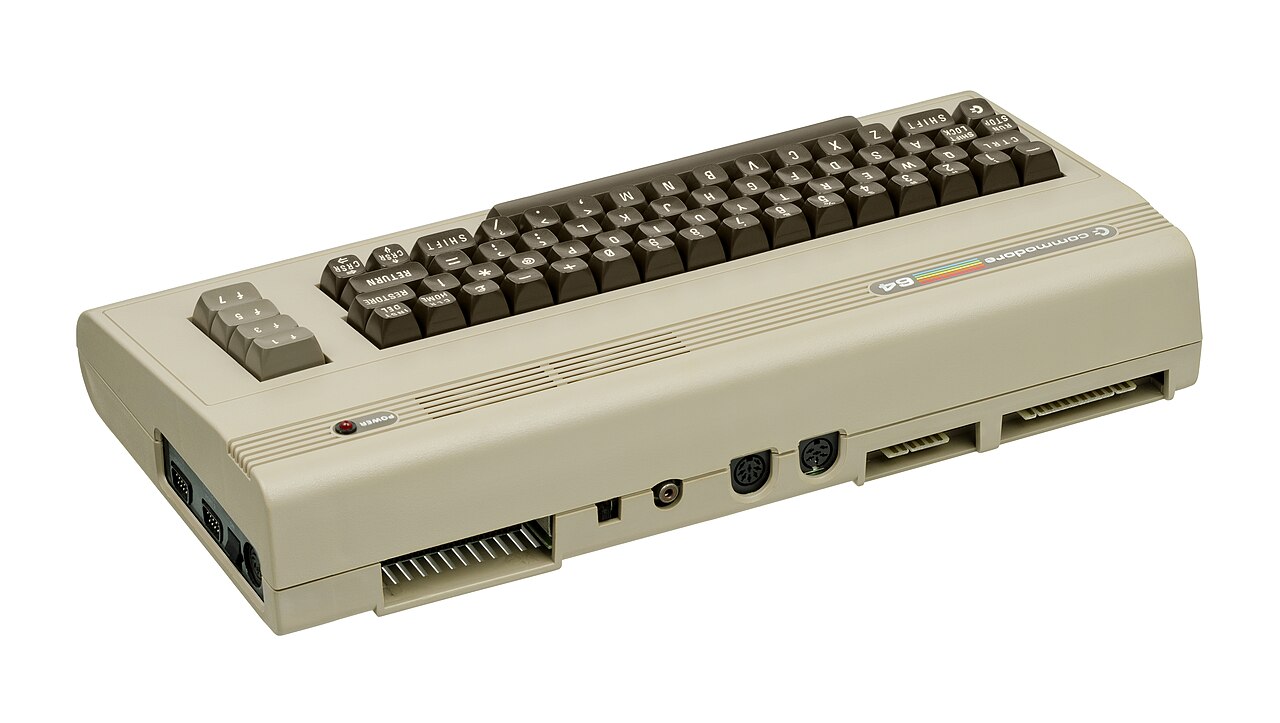
Photograph by Evan-Amos, 2017. Public domain (photographer’s dedication). Source and rights. View full size.

A chronology of publications, networks and gatherings
The collection becomes easier to navigate when its ideas are placed beside dated occasions. The following points are selected connections, not a claim that all these people belonged to one movement. Follow the individual essays for fuller accounts, graphics and sources.
- 1955–57: the city as an experiment. Guy Debord published his critique of urban geography in 1955; the Situationist International formed at Cosio d’Arroscia in 1957. The history begins with streets, writing and small gatherings, well before the web. Debord’s essay · Psychogeography.
- 1960s–70s: a religion circulated through paper. The Principia Discordia, correspondence among writers and the 1975 Illuminatus! trilogy gave people different routes into Discordian ideas. Wilson’s account of circulation · Discordianism.
- 1978: a shared computer becomes a bulletin board. Ward Christensen and Randy Suess’s Chicago project made leaving and retrieving messages possible through a home-built system. Their contemporary account · BBS culture and digital zines.
- 1980s: books, zines and local scenes. The Leeds chaos-magic scene connected bookshop conversations, small groups, publishing and a 1987 symposium. The Californian High Frontiers developed through Reality Hackers into Mondo 2000. Chaos magic · Cyberdelia.
- 1990: meeting beyond the screen. Houston’s XmasCon 1990 invitation welcomed hackers and other interested people; San Francisco’s Cyberthon offered twenty-four hours of virtual-reality demonstrations and discussion. HoHoCon invitation · Cyberthon documentation.
- 1994–96: a shared name on air and in the street. Radio Blissett linked studios, telephone callers, listeners and people exploring the city. Its participant account shows a network being enacted across media. Radio Blissett account · Luther Blissett.
- 1997–2001: international meetings and disagreement. The Cyberfeminist Internationals in Kassel, Rotterdam and Hamburg made room for presentations, discussion and experiments with conference formats. Kassel archive · Cyberfeminism.
- 1999–2003: media activists compare practices. Next 5 Minutes brought art, activism and media together, while the fourth edition grew from a network of local Tactical Media Labs. Organisers’ account of the labs · Tactical media.
- 2000: the fringe becomes a live programme. DisinfoCon at New York’s Hammerstein Ballroom brought readers and viewers together around speakers including Robert Anton Wilson and Grant Morrison. Disinformation.
- Later continuations. Adbusters’ 2011 Occupy invitation, the Discordian events around Cosmic Trigger in 2014 and cDc’s 2023 Veilid launch invitation show different afterlives. They are continuations and changes, not reasons to move the entire history into the present. Adbusters · CULT OF THE DEAD COW.
What did people actually do?
Across the collection, participation takes several forms. People wrote and copied texts, maintained bulletin boards, answered correspondence, contributed images, produced radio, gave talks, attended workshops, walked through cities and staged performances. Many activities required modest but sustained work: preparing a room, editing a publication, keeping a machine available or helping a newcomer understand the local conventions.
The meeting place could be a hotel, bookshop, café, gallery, festival site or home. It could also be a publication whose contributors never gathered at once. The expanded Church of the SubGenius essay provides another useful comparison, following local groups, devivals, X-Day gatherings, radio and publishing. A shared mythology acquired different forms depending on the occasion and the people making it.
It helps to distinguish an organisation from an audience. cDc and the Old Boys Network had identifiable collective projects. A magazine could connect readers who never joined anything. Luther Blissett was a shared name that different participants could use. Psychogeography and chaos magic encompass practices extending beyond any one group. The differences explain why there is no single answer to how these countercultures “held their meetings”.
How to read the records
A programme is evidence of what organisers planned; a report or recording can help establish what happened; a memoir shows how someone understood it later. A satirical declaration may be evidence of a performance rather than of the events it announces. The essays identify these distinctions because they change what a source can reasonably tell us.
Try following one object through the collection: a textfile, a poster, a radio broadcast or a conference talk. Who made it? How did another person encounter it? What could that person contribute in return? The answers reveal the social arrangements behind the imagery of networks, viruses, frontiers and undergrounds.
The collection’s recurring question is therefore practical as well as interpretive: what did a metaphor enable people to organise, notice or attempt? Reading the ideas beside their histories keeps both their imaginative force and their material conditions in view.
Why study this at the Metaphor Society?
Calling information a virus makes copying sound like infection. Calling a network a frontier makes settlement and escape appear possible. Calling advertising pollution implies that attention is an environment someone can damage. These expressions do more than describe a technology: they suggest roles, enemies, responsibilities and possible actions.
Our approach is to read the metaphors closely, alongside the material circumstances in which people used them. A clever parody might expose a hidden assumption; it might also become another desirable image. A decentralised network might widen participation while leaving newcomers facing expense, exclusion or unwritten rules. A suspicion of authority can encourage investigation, but it cannot establish the truth of an alternative claim on its own.
A contemporary point of contact
In “Media Activists Gather in Amsterdam”, Randy Ghent reported on the 1999 Next Five Minutes gathering, bringing independent radio, internet campaigns, artists and hacktivism into the same frame. His report also recorded disagreements about technology and political effectiveness. The connections explored here were already being debated by participants. Adbusters, no. 26 (July/August 1999), p. 46; scan, PDF page 52.
VOICES FROM THE ARCHIVE
Brian Holmes, of the political art group Ne Pas Plier, described what the Amsterdam gathering made possible:
“The extraordinary thing was the way N5M knitted together intelligent, open conversations between activists”
Brian Holmes, quoted by Randy Ghent, “Media Activists Gather in Amsterdam”, Adbusters, no. 26 (July/August 1999), p. 46; PDF page 52. Excerpt.
The image of knitting gives the connections a material texture: separate threads become something people make together. It offers a useful way to approach this collection’s overlapping scenes, whose encounters mattered without making them a single movement.
Read across the Society
A PUBLIC READING COLLECTION
The Language We Live Inside
The personal web also made room for unusual approaches to language and imagination. This companion collection begins with Dan Scorpio’s archived Angelfire writing and offers twelve original essays and five reading guides on questions, metaphors, familiar phrases and stories.
Free to read — no membership required. Explore the essays and guides →
Continue with Robert Anton Wilson and Psyche and Plasticity for related explorations of perception, belief and cultural experiments in changing minds.
Reading the central metaphor
A network
Connections become visible when we follow an object, person or event between settings. The links in this collection are of different kinds: shared infrastructure, personal collaboration, a reused technique or an editorial comparison.
What the metaphor leaves out: A network drawing can make every connection look equivalent. A common vocabulary does not prove personal contact, common politics or membership in one movement.
An interpretive reading by this collection, to be tested against the historical material above.
Watch: from counterculture to digital culture
Stanford historian Fred Turner traces connections between twentieth-century media experiments, the counterculture and later digital communities. This Long Now lecture provides a wider historical frame for the magazines, networks and gatherings explored in this collection.
Viewing guide
- 6:09 — The Whole Earth Catalog as a historical puzzle
- 17:40 — Turner introduces the “democratic surround”
- 25:15 — Why “the counterculture” is not a single movement
Discuss: Which connection can you establish from a dated record? Which resemblance remains an interpretation?
English automatic captions and a transcript were available when checked. Automatic transcription can mishear names and specialist terms. Open the original YouTube video, expand its description and use “Show transcript” where available. Viewing notes checked 5 November 2026. Time links open the original recording.
About this edition
Prepared for The Metaphor Society with AI assistance. Research revision: . This is an editorial research essay, not a peer-reviewed history.
Contemporary programmes and documents are read beside later interviews and scholarship. An announcement establishes what was proposed; a report records a particular account of what occurred. Satire is identified as performance, and metaphor analysis is presented as interpretation. Dates refer to the original event or publication where established; later web editions and uncertain details are labelled. No single participant account represents an entire scene.
For a correction, use the Society’s contact page and include this article’s title, the passage concerned and a supporting source. Historical event links are records, not assurances that a meeting is still taking place.
Sources and further reading
References below identify the kind of evidence being used. Image provenance is credited beside each image; the video’s uploader and recording context appear beside the player. A source’s own claims are not independent verification of its effects.
Books and periodicals
- Adbusters, no. 26, July/August 1999. Start with Randy Ghent’s “Media Activists Gather in Amsterdam”, p. 46, for a contemporary encounter between the themes.
- Principia Discordia, attributed to Malaclypse the Younger. Read the fourth-edition text alongside its introductions, “Norton Cabal Interview” and digital colophon. The different layers show how a countercultural document travels.
- Russ Kick, ed., You Are Being Lied To (2001). Read the publisher’s notice and “About Disinformation” before comparing individual contributors.
- Russ Kick, ed., Abuse Your Illusions (2003). A further anthology for investigating how media criticism, alternative interpretation and the promise of revelation are packaged together.
- Russ Kick, 50 Things You’re Not Supposed to Know (2003). A compact example of the numbered revelation as an editorial form; each claim needs to be assessed on its own sources.
- Russ Kick, Disinformation Book of Lists. A companion for examining how selection and juxtaposition shape the meaning of a collection.
- Russ Kick, ed., You Are Still Being Lied To (2009). A later remix, useful for tracing the project’s afterlife. Its contents should not be backdated to the first anthology.
Open the archive and source notes (17)
- Guy Debord, “Introduction to a Critique of Urban Geography” (1955). Ken Knabb translation; theoretical primary text.
- Robert Anton Wilson, introduction to the fourth-edition Principia Discordia. Retrospective participant account of circulation; web transcription.
- Ward Christensen and Randy Suess, “Hobbyist Computerized Bulletin Board”, BYTE, November 1978. Contemporary article; scanned PDF.
- cDc, XmasCon ’90 invitation, 17 November 1990, announcing Houston, 28–30 December. Contemporary event announcement.
- David Lawrence, Cyberthon video documentation and shot list. Event: 6–7 October 1990; later online presentation.
- Luther Blissett, “Mondo Mitomane 1994–96”. Participant account of the radio projects and urban actions.
- Old Boys Network, First Cyberfeminist International archive. Kassel, 20–28 September 1997; event documentation.
- Next 5 Minutes 4, “About N5M4”. Organisers’ preparatory account of the 2002–03 tactical-media labs.
- R. U. Sirius in conversation with Douglas Rushkoff, “Operation Mindfuck Was Too Successful”, 17 August 2017. Retrospective interview.
- Gyrus, “Chaos and Beyond: An interview with Phil Hine”, conducted 1997. Participant interview; later web edition.
- J. Christian Greer, “Stark Fist of Removal”. Historical commentary and reproductions of early issues; undated web presentation.
- Luther Blissett project archive. Participants’ self-description and collected documents; consult the dates on individual records.
- VNS Matrix, A Cyberfeminist Manifesto for the 21st Century (1991). Artists’ archive with later project commentary and reproductions.
- Old Boys Network, FAQ. Organisational self-description; undated archived web text.
- Jack Boulware, “A History of Mondo 2000, Part 1”. Interview-based retrospective history; online republication.
- Robert P. Baird, “Stories Are Not All Equal: An Interview with Wu Ming”, Chicago Review, vol. 52, nos. 2–4 (2006), pp. 250–259. Collective interview; PDF.
- Old Boys Network, Very Cyberfeminist International reader, Hamburg, 13–16 December 2001. Contributions and programme material; PDF.