Psyche & Plasticity · Pioneers and Provocateurs
Timothy Leary
Psychology, psychedelics and the politics of consciousness
Timothy Leary was a psychologist, researcher, writer, cultural nuisance and one of the most recognisable advocates of psychedelic experience in the twentieth century. His transformation from an academically respected personality theorist into an international symbol of the counterculture remains one of the most dramatic and controversial stories in modern psychology. Luckily, despite all the controversy, he seemed like a nice guy.
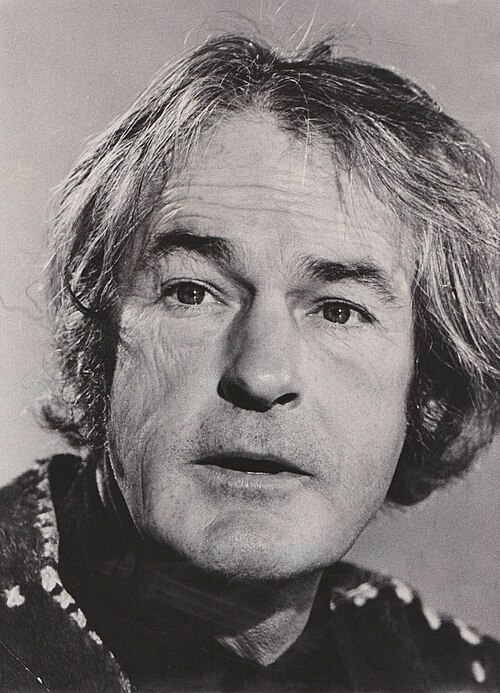
Photo of Timothy Leary from 1969
Born
22 October 1920
Bord in Springfield, Massachusetts, United States.
His dad was a dentist.
Died
31 May 1996
Los Angeles, California, aged 75.
His book, “A Design for Dying” was published posthumously.
Known for
Psychedelic psychology
Personality theory, consciousness, psychedelic advocacy and countercultural influence.
Before the psychedelic icon
The psychologist before the celebrity
The public image of Timothy Leary can obscure the fact that he began his career as a serious academic psychologist. After a complicated educational path that included West Point and military service, he completed a doctorate in clinical psychology at the University of California, Berkeley, in 1950.
His early work concentrated on personality, interpersonal behaviour and psychotherapy. At the Kaiser Foundation in Oakland, California, he helped develop methods for mapping patterns of interaction between people. His 1957 book Interpersonal Diagnosis of Personality presented a systematic model of interpersonal behaviour organised around dimensions such as dominance, submission, affiliation and hostility.
Leary’s later interest in psychedelics did not arise from nowhere. He was already concerned with how personality is organised, how people become trapped in repetitive patterns and whether human behaviour can be changed more quickly than conventional psychotherapy appeared to permit.
Leary’s central question remained remarkably consistent: how does a human being change the structures through which experience is interpreted?
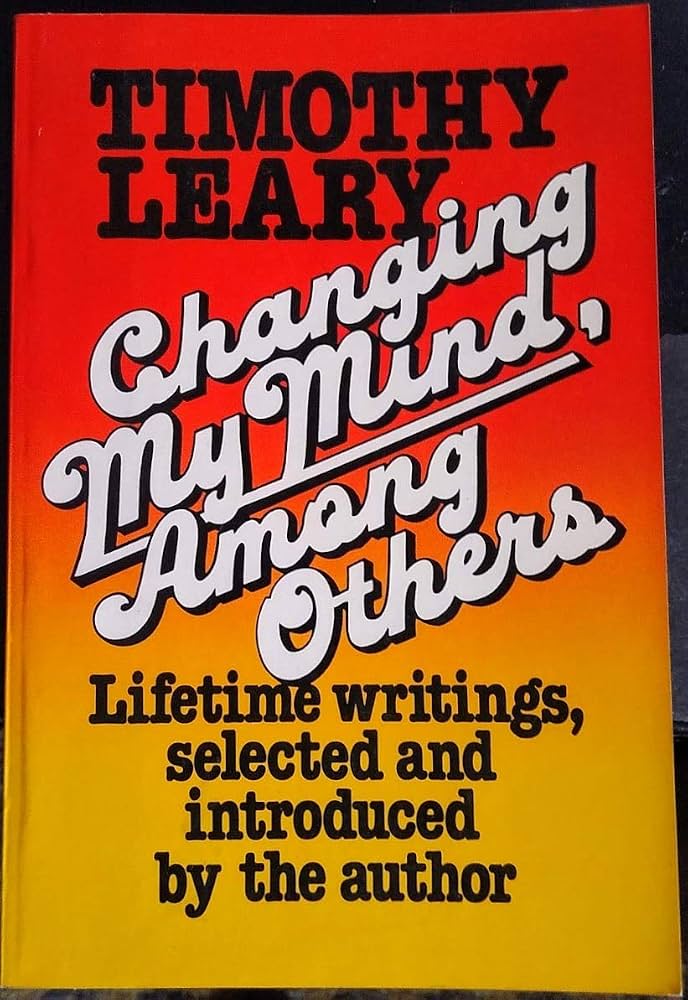
Selected Works
1959 to 1963
Harvard and the Psilocybin Project
Leary joined Harvard University as a lecturer in 1959. Following his own experience with psilocybin mushrooms in Mexico, he became convinced that psychedelic substances could provide unusually direct access to changes in perception, identity and behaviour.
With Richard Alpert, later known as Ram Dass, and colleagues including Ralph Metzner, Leary established the Harvard Psilocybin Project. Their work investigated psilocybin in relation to creativity, religious experience, personality and behavioural change.
The researchers emphasised what came to be called set and setting. The effects of a psychedelic experience, they argued, could not be understood solely in terms of chemistry. A person’s expectations, emotional state, relationships, physical surroundings and cultural framework all shaped what occurred.
Experiments and their limitations
Religion, rehabilitation and research
The Good Friday Experiment
In 1962, graduate student Walter Pahnke conducted the Good Friday Experiment under Leary’s supervision. Divinity students received either psilocybin or an active placebo before a religious service at Boston University’s Marsh Chapel. Perhaps somewhat unsurprisingly, many participants who received psilocybin reported experiences they interpreted as mystical or religious.
The experiment became highly influential, but its design and reporting have been criticised. Participants and researchers could often infer who had received psilocybin, and the management of difficult reactions would not meet modern research standards.
The Concord Prison Experiment
Between 1961 and 1963, Leary’s team worked with 32 prisoners at Massachusetts Correctional Institution Concord. Psilocybin was combined with group psychotherapy in an attempt to reduce the likelihood that participants would return to prison after release.
Leary and his colleagues initially reported striking reductions in recidivism. A later 34 year follow-up by Rick Doblin found that the original comparison had used unequal follow-up periods. When the groups were compared more carefully, the claimed reduction could not be supported. The follow-up suggested that structured support after release may have been more important than the original report acknowledged.
Leary’s work illustrates both the imaginative possibilities of early psychedelic research and the danger of allowing enthusiasm to outrun the evidence.
The break with academia
Controversy at Harvard
Leary and Alpert’s work generated growing concern within Harvard. Critics questioned their research methods, the boundaries between investigator and participant, the selection of subjects and their increasingly public advocacy. The researchers’ own use of psychedelic substances with participants further complicated conventional distinctions between experiment, therapy and personal exploration.
Their Harvard careers ended in 1963. Accounts often compress this into the statement that both men were dismissed for giving drugs to students. The institutional history was more complicated, but the outcome was clear. Psychedelic research moved out of the university and into a much less regulated cultural environment.
This transition changed Leary’s role. He was no longer primarily an investigator asking what psychedelics might do. He increasingly became an advocate telling the public what he believed they could make possible.
Millbrook, New York
Consciousness as a way of life
After leaving Harvard, Leary, Alpert, Metzner and their associates established themselves at the Hitchcock Estate in Millbrook, New York. The large house became part research centre, part commune, part spiritual retreat and part cultural experiment.
At Millbrook, psychedelic experience was combined with meditation, yoga, group work, art, music and theatrical presentation. Leary’s interests expanded from clinical psychology toward religion, mythology and the deliberate construction of environments intended to shape consciousness.
Leary, Alpert and Metzner published The Psychedelic Experience in 1964. Inspired by an interpretation of The Tibetan Book of the Dead, it offered a symbolic map for navigating the dissolution and reconstruction of ordinary identity.
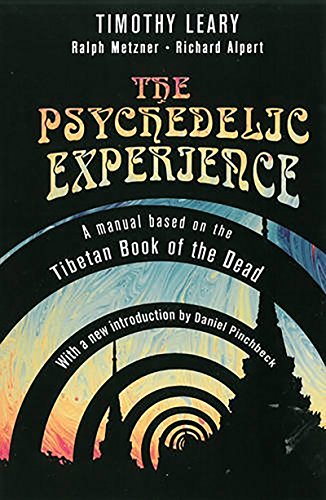
The Psychedelic Experience
From psychologist to symbol
The countercultural Leary
By the middle of the 1960s, Leary had become a media figure. His talent for compressing complex ideas into memorable phrases made him attractive to journalists and young audiences. It also encouraged a simplified public image in which psychedelic transformation appeared immediate, universal and readily available.
The phrase most associated with him, “Turn on, tune in, drop out”, was presented at the Human Be-In in San Francisco in 1967. Leary later explained that “drop out” was not intended simply as social withdrawal. He regarded it as disengagement from unconscious and imposed patterns. Yet the phrase was widely heard as an invitation to abandon education, work and social responsibility.
His public advocacy contributed to a cultural opening around consciousness, spirituality and personal experimentation. It also made careful psychedelic research harder to separate from sensationalism. Many later researchers have argued that Leary’s style helped provoke the political backlash that restricted psychedelic science for decades.
The problem of the slogan
A slogan can make an idea portable, but portability comes at the cost of context. Leary’s most successful phrases travelled much further than his qualifications, cautions and theoretical explanations.
Arrest, escape and exile
The fugitive years
Leary’s repeated drug arrests made his life increasingly inseparable from the politics of prohibition. In 1970 he received a lengthy prison sentence in California. Later that year, he escaped from the California Men’s Colony with assistance from the Weather Underground.
Leary and his wife Rosemary travelled first to Algeria, where they stayed with Eldridge Cleaver and the international section of the Black Panther Party. Leary later moved through Switzerland and other parts of Europe. He was arrested in Afghanistan in 1973 and returned to the United States.
He remained imprisoned until 1976. His cooperation with federal investigators damaged relationships with former associates and added another layer of dispute to an already divided reputation. Admirers interpreted his actions as survival under extreme pressure. Critics saw betrayal and self-preservation.

“Throughout human history… it has been the authorities, the political, the religious, the educational authorities who attempted to comfort us by giving us order, rules, regulations… To think for yourself you must question authority and learn how to put yourself in a vulnerable, open-mindedness…“
A speculative map of consciousness
The eight-circuit model
During the 1970s, Leary developed a model in which consciousness was organised into a series of neurological circuits. The earlier circuits concerned survival, emotion, symbolic thought and social organisation. The later circuits were associated with bodily awareness, metaprogramming, evolutionary consciousness and forms of experience that Leary described in increasingly cosmic terms.
Robert Anton Wilson adopted and developed the model in books including Cosmic Trigger and Prometheus Rising. Wilson treated it less as established neurological fact than as a set of provisional lenses for examining perception and belief.
The model is not accepted as a scientific account of brain organisation. Its enduring value lies instead in its role as a speculative metaphor for examining how different states, assumptions and behavioural priorities organise experience.
The later Leary
Computers, futurism and self-invention
After his release, Leary repositioned himself as a futurist and what he sometimes called a stand-up philosopher. His interests turned toward space migration, intelligence increase, life extension, (acronym: “S.M.I2.L.E.”) computers and the possibility that electronic media would become tools for self-exploration.
He became interested in personal computers at a time when they were moving from specialist environments into ordinary homes. Software, interactive media and digital identity appeared to offer another route through which people might examine and reprogramme their habits of thought.
Leary toured with his former adversary G. Gordon Liddy, transforming their political differences into public debates. He also maintained friendships with writers, musicians, technologists and cultural experimenters, including Robert Anton Wilson, William Gibson and Allen Ginsberg.
Selected chronology
A life in transition
1950
Completes his doctorate in clinical psychology at Berkeley.
1959
Joins Harvard University as a lecturer in psychology.
1960
Begins the Harvard Psilocybin Project with Richard Alpert.
1963
His Harvard appointment ends and the Millbrook period begins.
1970
Escapes from prison and begins a period of international exile.
1976
Released from prison and begins his later career as a writer and lecturer.
Assessment
A divided legacy
Leary’s legacy resists a simple judgement. He recognised earlier than many of his contemporaries that psychedelic experiences could not be separated from expectation, relationship, environment and meaning. His work helped establish questions that have returned to contemporary research under more controlled conditions.
At the same time, his confidence frequently exceeded the available evidence. His movement from research into unrestricted advocacy blurred scientific, therapeutic, spiritual and recreational claims. His public persona sometimes displaced the vulnerable people, methodological weaknesses and adverse outcomes that responsible research must consider.
The current revival of psychedelic research has inherited both sides of this history. It shares Leary’s interest in rapid psychological change, context and meaningful experience, while attempting to restore ethical oversight, clinical caution, methodological discipline and long-term follow-up.
Leary can be understood neither simply as a visionary nor simply as a warning. He remains an example of what happens when psychology, charisma, politics, technology and the desire for transformation become concentrated in one public figure.
Sources and further reading
- Harvard University Department of Psychology: Timothy Leary
- New York Public Library: Timothy Leary Papers
- New York Public Library: Acquisition of the Timothy Leary Archive
- Rick Doblin: 34 year follow-up of the Concord Prison Experiment
- Timothy Leary, Ralph Metzner and Richard Alpert, The Psychedelic Experience, 1964
- Timothy Leary, Interpersonal Diagnosis of Personality, 1957
- Robert Anton Wilson, Prometheus Rising, 1983
This page is intended as a historical and critical examination. It does not constitute medical advice or encourage the unlawful use of controlled substances.