Psyche and Plasticity
Stanislav Grof
Psychedelic research, holotropic states and the extended map of the psyche
Stanislav Grof is a Czech-born psychiatrist whose career has centred on unusual states of consciousness. His work began with clinical LSD research in Czechoslovakia and the United States, continued through the development of transpersonal psychology, and led to the creation of Holotropic Breathwork with Christina Grof.

Born
1 July 1931
Birthplace
Prague, Czechoslovakia
Profession
Psychiatrist
Known for
Transpersonal psychology
An introduction
Mapping unusual states of consciousness
Grof’s career began during the first era of psychiatric research with LSD. While observing and supervising psychedelic sessions, he became interested in experiences that did not fit comfortably within the psychological theories in which he had been trained.
Participants reported childhood memories, bodily sensations, symbolic death and rebirth, apparent reliving of birth, mythological imagery, experiences of identification with other people or forms of life, and states interpreted as mystical or cosmic.
Grof attempted to organise these reports into an extended map of the psyche. Some parts of this map have influenced psychedelic therapy and transpersonal psychology. Other parts, particularly claims concerning birth memories and transpersonal information, remain scientifically disputed.
Medical education in Prague
Grof was born in Prague and studied medicine at Charles University. He specialised in psychiatry and received further training in psychoanalysis.
He has described an early interest in animated film, art and the work of Sigmund Freud. Psychoanalysis initially appeared to offer a comprehensive explanation of the human mind, but the practical duration and limitations of conventional analysis eventually left him dissatisfied.
His encounter with LSD came at a time when the substance was legally distributed to researchers. Early psychiatrists explored whether it might model psychosis, assist psychotherapy or provide clinicians with a greater understanding of unusual mental states.

The first psychedelic era
Clinical LSD research in Prague
Between 1960 and 1967, Grof was principal investigator in a psychedelic research programme at the Psychiatric Research Institute in Prague.
The work explored LSD as an adjunct to psychotherapy and as a means of studying consciousness. Sessions often involved music, eye shades, sustained therapeutic support, and later discussion of the experience.
Grof concluded that psychedelic sessions could intensify psychological material and bring emotionally charged patterns into awareness. He also observed experiences that appeared to extend beyond conventional autobiographical memory.
These observations became the basis for his later theories of the perinatal and transpersonal dimensions of consciousness.
The move to the United States
In 1967, Grof travelled to the United States as a clinical and research fellow. He worked at Johns Hopkins University and the research unit at Spring Grove State Hospital in Maryland.
In 1969, he became chief of psychiatric research at the Maryland Psychiatric Research Center and an assistant professor of psychiatry. The research programme studied psychedelic therapy with several patient groups, including people facing cancer and severe end-of-life distress.
The Maryland work contributed to early evidence that a carefully supported psychedelic session might reduce anxiety, depression and fear of death in some patients with life-threatening illness.
Historical research standards
Early psychedelic studies made important observations, but their methods did not always meet current expectations for randomisation, controls, blinding, diagnostic consistency and systematic adverse-event reporting. Historical results should be interpreted in that context.
An extended cartography of the psyche
Grof proposed that human experience could be organised into three broad domains.
Biographical
Experiences connected to life after birth, including childhood memories, relationships, trauma, conflict, and unresolved emotional situations.
Perinatal
Experiences interpreted as connected with biological birth, bodily constriction, struggle, death and rebirth.
Transpersonal
Experiences in which ordinary identity appears to extend beyond the individual body, biography or familiar boundaries of time and space.
The biographical domain overlaps with established psychotherapeutic concerns. Grof’s perinatal and transpersonal categories are more controversial. Reports of such experiences are real as subjective events, but their occurrence does not by itself establish Grof’s interpretation of their origin.
Systems of condensed experience
Grof used the term COEX system, meaning a system of condensed experience, to describe clusters of memories and feelings organised around a shared emotional or bodily theme.
For example, experiences of humiliation from different periods of life might become linked into a recurring pattern. A present situation could activate the entire network, causing a response that appears disproportionate when viewed only in relation to the immediate event.
This idea resembles concepts such as schemas, memory networks, emotional learning and state-dependent recall. Grof extended it further by linking some networks to perinatal and transpersonal material.
A present trigger may connect with an organised network of earlier experiences rather than with one isolated memory.
The basic perinatal matrices
Grof proposed four basic perinatal matrices, each associated with a stage of biological birth and a recurring pattern of imagery, emotion and bodily sensation.
- Matrix I: intrauterine existence before labour, associated with unity, safety or disturbance.
- Matrix II: contractions before the cervix opens, associated with confinement and apparent hopelessness.
- Matrix III: movement through the birth canal, associated with struggle, pressure, aggression and intense energy.
- Matrix IV: emergence and separation, associated with release, death and rebirth imagery.
Grof connected these matrices with mythology, religion, psychopathology, art and cultural symbolism.

Scientific caution
There is no scientific consensus that adults retain detailed episodic memories of their own birth or that Grof’s four matrices represent established neurological structures. The matrices are best presented as Grof’s interpretive framework for recurring experiential themes.
Transpersonal experiences
Grof uses “transpersonal” to refer to experiences in which an individual appears to move beyond the ordinary boundaries of personal identity. Reported examples include:
- Identification with another person
- Identification with animals or plants
- Experiences of ancestral material
- Apparent past-life experiences
- Encounters with mythological figures
- Archetypal imagery
- Experiences of cosmic unity
- States interpreted as mystical
Psychology can study the form, frequency, context and consequences of these experiences without automatically confirming their metaphysical interpretation. An experience of being another person, for example, does not by itself demonstrate literal transfer of identity or memory.
Grof generally argues that such reports challenge materialist accounts of mind. Critics respond that unusual experiences can be psychologically important while still arising through imagination, memory, expectation, culture and altered brain function.
California and the human potential movement
Esalen Institute
In 1973, Grof moved to the Esalen Institute at Big Sur, California, as scholar-in-residence. He remained there until 1987.
Esalen was a major centre of the human potential movement. It brought together psychologists, philosophers, bodyworkers, artists, spiritual teachers and researchers interested in forms of development outside conventional academic boundaries.
At Esalen, Grof wrote, taught and worked with Christina Grof. Together they developed Holotropic Breathwork as a non-drug method for facilitating intense experiential states.
Holotropic Breathwork
Stanislav and Christina Grof developed Holotropic Breathwork during the 1970s. The name combines Greek roots that can be interpreted as “moving towards wholeness.”
A typical session combines accelerated breathing, evocative music, focused bodywork when appropriate, expressive artwork and group discussion. Participants usually work in pairs, alternating between the roles of breather and sitter.
The method is intended to facilitate what Grof calls a holotropic state: an unusual state of consciousness oriented towards psychological integration or wholeness.
Evidence and safety
Research into Holotropic Breathwork remains limited compared with established psychological treatments. Intense or prolonged breathing can produce dizziness, tingling, muscular contractions, panic, fainting and other physiological effects. The practice is unsuitable for some people with cardiovascular, neurological, psychiatric, pregnancy-related or other medical risks.
It should be undertaken only after appropriate screening and with competent facilitation. It should not be presented as a substitute for emergency care, medical treatment or evidence-based mental healthcare.
Spiritual emergency
Stanislav and Christina Grof developed the concept of spiritual emergency to describe crises in which unusual experiences, identity changes or spiritual concerns become overwhelming and interfere with ordinary functioning.
They suggested that some crises might contain the possibility of psychological reorganisation when the person receives appropriate support. The phrase “spiritual emergence” refers to a more manageable developmental process, while “spiritual emergency” refers to a disruptive crisis.
The concept has encouraged clinicians to listen respectfully to the meaning that people assign to unusual experiences. However, spiritual framing must not replace careful assessment.
Clinical caution
Psychosis, mania, severe depression, delirium, neurological illness, drug reactions and other urgent conditions may initially resemble a spiritual crisis. Safety, medical assessment and appropriate psychiatric care must take priority when there is significant risk or impairment.
Transpersonal psychology
Beyond pathology
Unusual experience is not automatically regarded as evidence of illness. Context, function, distress and consequences must be considered.
Beyond the ego
Psychology can examine experiences of unity, self-transcendence and spiritual meaning without reducing every report to error.
Beyond one discipline
Transpersonal psychology draws from psychotherapy, anthropology, religious studies, consciousness research and contemplative traditions.
Grof became one of the field’s principal theorists and the founding president of the International Transpersonal Association. Transpersonal psychology has influenced therapists and consciousness researchers, but it remains outside the mainstream of many academic psychology departments.
Selected works
Psychedelic therapy
- Realms of the Human Unconscious
- LSD Psychotherapy
- The Human Encounter with Death, with Joan Halifax
Transpersonal theory
- Beyond the Brain
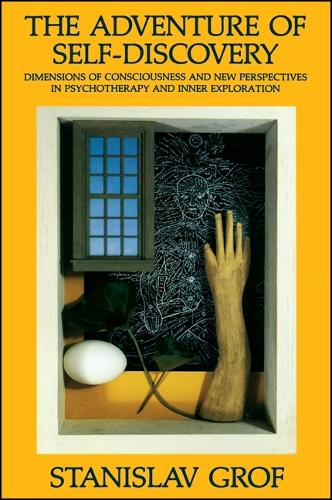
- The Adventure of Self-Discovery
- Psychology of the Future
- The Cosmic Game
Breathwork and crisis
- Holotropic Breathwork, with Christina Grof
- Spiritual Emergency, edited with Christina Grof
- The Stormy Search for the Self, with Christina Grof
- The Way of the Psychonaut
A brief chronology
1931
Born in Prague, Czechoslovakia.
1950s
Trains in medicine, psychiatry and psychoanalysis and begins studying LSD.
1960 to 1967
Leads psychedelic research at the Psychiatric Research Institute in Prague.
1967
Moves to the United States and continues psychedelic research in Maryland.
1969
Becomes chief of psychiatric research at the Maryland Psychiatric Research Center.
1973
Moves to Esalen Institute as scholar-in-residence.
Mid-1970s
Develops Holotropic Breathwork with Christina Grof.
2020
Launches Grof Legacy Training with Brigitte Grof.
Influence and legacy
Psychedelic therapy
His clinical observations helped preserve knowledge from the first era of psychedelic research and influenced later therapeutic models.
Transpersonal psychology
He developed one of the field’s most detailed frameworks for interpreting unusual and spiritually significant experiences.
Experiential practice
Holotropic Breathwork created an international community of practitioners exploring non-drug altered states.
A balanced assessment
Grof occupies an unusual position between clinical psychiatry, psychedelic history, experiential psychotherapy and spiritual philosophy. His work should be neither dismissed without examination nor presented as settled science.
- His early LSD research forms an important part of psychedelic history.
- His emphasis on preparation, environment and integration remains relevant.
- COEX systems provide a useful way to consider linked emotional memories.
- Perinatal matrices remain an interpretive theory rather than an established model of memory or brain function.
- Transpersonal experiences can be psychologically meaningful without proving a particular metaphysical explanation.
- Holotropic Breathwork requires screening, competent facilitation and further clinical research.
- Spiritual interpretations should never prevent necessary medical or psychiatric assessment.
Grof’s central challenge to psychology is that unusual states may contain structured and meaningful material. The continuing task is to investigate that possibility while maintaining scientific discipline, clinical safety and openness to competing explanations.
Sources and further reading
- Esalen Institute: Stanislav Grof
- Penguin Random House: Stanislav Grof biography
- Grof Legacy Project: Grof Breathwork
- Stanislav Grof, Realms of the Human Unconscious
- Stanislav Grof, LSD Psychotherapy
- Stanislav Grof, Beyond the Brain
- Stanislav Grof, Psychology of the Future
- Stanislav and Christina Grof, Holotropic Breathwork
- Stanislav and Christina Grof, The Stormy Search for the Self
This page provides historical and educational information. Psychedelic substances remain legally controlled in many jurisdictions and can carry serious psychological and physical risks. Intensive breathwork may also be unsuitable for people with particular medical or psychiatric conditions. Nothing on this page constitutes medical advice or encouragement to use controlled substances.