Dream theories and the invention of the unconscious
Sigmund Freud and Wish Fulfilment
Freud proposed that dreams are meaningful psychological constructions in which wishes find an altered form of expression. His theory transformed the cultural status of dreams, but its central claims remain interpretive propositions rather than established findings of modern dream science.
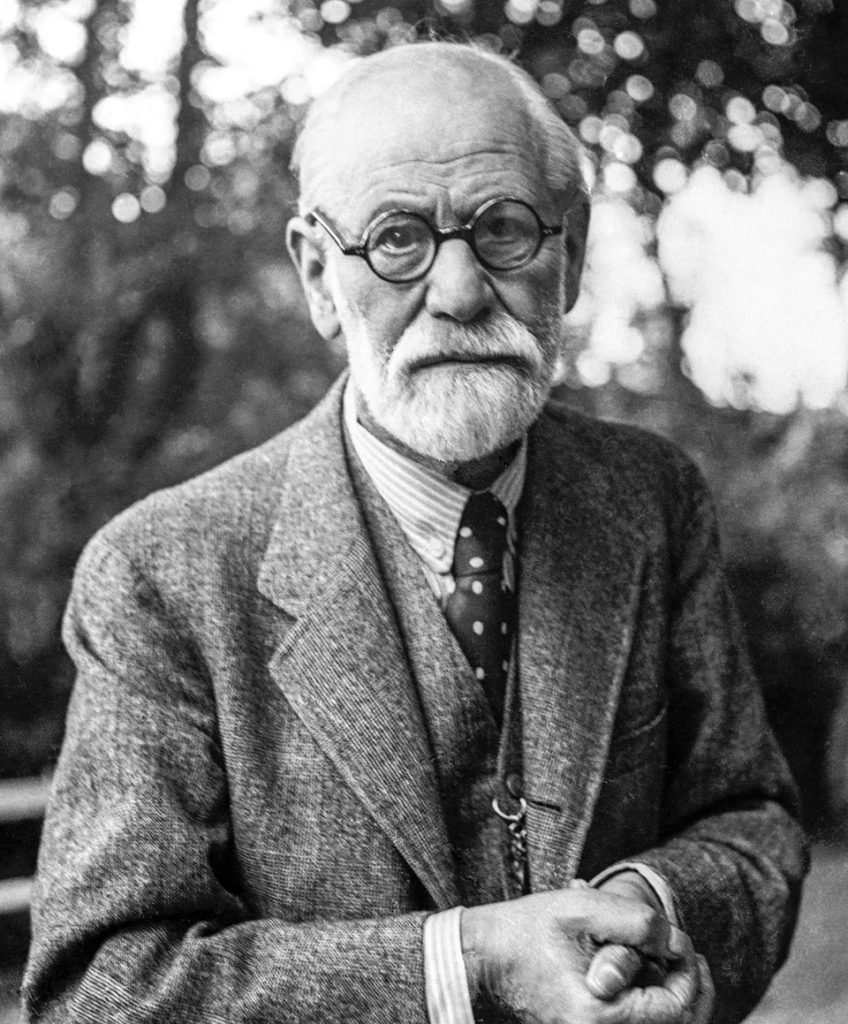
Historical theory, continuing influence
How to approach Freud on dreams
The Interpretation of Dreams, first published in 1899 but dated 1900, offered a systematic account of dreams as psychologically meaningful. Freud did not regard a dream as a supernatural message or a fixed code of universal symbols. He treated it as a form of mental activity connected with the dreamer’s memories, conflicts, desires and recent experiences.
The theory is historically important and remains influential in psychotherapy, literature, cinema and art. Historical importance, however, does not make every element scientifically correct. A careful reading separates Freud’s observations, his interpretive method and his broad model of mind from claims that can be tested using contemporary dream research.
Despite the modern new age interpretations, Freud’s enduring question was not simply, “What does this symbol mean?” It was, “What sequence of thoughts, memories and associations made this particular dream possible for this particular person?”
What Freud meant by wish fulfilment
In everyday speech, wish fulfilment suggests a pleasant fantasy in which a desired event simply happens. Freud’s proposal was wider and more complicated. He argued that a wish could be unconscious, infantile, conflicted, prohibited or unacceptable to the waking personality. Its fulfilment might therefore be indirect, disguised or accompanied by anxiety.
Freud began with simple examples. A thirsty person might dream of drinking. A child denied an outing might dream that the outing took place. In these cases the connection between desire and dream appears obvious. Adult dreams, he argued, often require interpretation because the wish encounters resistance and is transformed before it becomes the remembered dream.
A want
A need, desire, impulse or imagined outcome presses for satisfaction.
An obstacle
Reality, conscience, conflict or repression prevents direct satisfaction.
A dream solution
The wish gains imagined satisfaction, sometimes after extensive transformation.
This sequence summarises Freud’s model. It is not a process that contemporary neuroscience has located as three discrete stages in the sleeping brain.
Two levels of description
Manifest content and latent dream thoughts
| Freudian term | Meaning | Important qualification |
|---|---|---|
| Manifest content | The dream as experienced or remembered: its scenes, people, events, words and emotions. | A dream report is already a waking recollection and may omit or reorganise details. |
| Latent dream thoughts | The wishes, memories, conflicts and chains of association proposed to have contributed to the dream. | These are inferred through interpretation. They are not a hidden text that can be independently read from the dream. |
| Dream-work | The transformations said to convert latent thoughts into the manifest dream. | Modern research does not confirm a unique censorship mechanism producing disguised dream content. |
The distinction is often simplified into “the dream” and “what the dream really means.” Freud’s method was less mechanical than that phrase suggests. The latent material was generated through the dreamer’s associations. It was not supposed to be read directly from an object by consulting a universal symbol list.

The dream-work
Freud used the term dream-work for the mental operations that produce the peculiar form of dreams. He distinguished this production of the dream from interpretation, which attempts to move from the remembered dream back towards the thoughts associated with it.
These ideas can still provide a rich vocabulary for describing how dream imagery feels compressed, displaced and visually inventive. It’s important to note that their usefulness as descriptions does not prove Freud’s proposed causal system of wishes and censorship.
Four operations associated with dream-work
Condensation
Several people, ideas or memories may be compressed into a single figure or scene. A dream character may have one person’s face, another’s manner and a third person’s name.
Displacement
Emotional importance may be transferred from a troubling thought to an apparently minor object or person. What seems central in the dream may not be central in the associated thoughts.
Representability
Abstract thoughts are transformed into sensory scenes, actions and images. A social predicament may become a blocked road, an exposed room or a missed train.
Secondary revision
The mind gives fragments a more coherent narrative shape. This may occur as the dream develops or as it is remembered and narrated after waking.
Censorship and the guardian of sleep
Freud proposed that wishes capable of disturbing the dreamer meet psychological resistance. Dream-work disguises them sufficiently to permit sleep to continue. The dream was therefore described as a guardian of sleep: instead of waking to act upon every internal demand, the sleeper hallucinates a form of satisfaction.
This model explains obscurity by placing censorship behind it. It also creates a scientific difficulty. If an enjoyable dream confirms wish fulfilment, while an unpleasant dream is interpreted as a disguised or failed wish fulfilment, almost any result can be accommodated after the event. A theory that can reinterpret every apparent counterexample risks becoming difficult to falsify.
Critical question: what observation would count against the claim that every dream contains a disguised wish? If no possible dream could do so, the claim cannot be tested in the ordinary scientific sense.
Day residues, childhood and unconscious wishes
Day residues
Recent conversations, frustrations, perceptions and unfinished tasks provide material for dreams. Freud called these remains of waking life the residues of the day.
Infantile sources
Freud argued that an unconscious childhood wish supplies the motivational force, while recent events offer an occasion and representational material.
A point of contact
Modern research supports continuity between waking concerns and dream content. It does not establish that recent material must be energised by a repressed infantile wish.
The dream of Irma’s injection
Freud’s best-known worked example began with a dream of his from the night of 23 July 1895. A patient whom he called Irma appeared unwell at a gathering. Other doctors entered the scene, examined her and implicated an injection given with an unclean syringe.
The day before, in real life, Freud had received a discouraging report on the patient’s progress. Through an extended series of associations, he interpreted the dream as releasing him from responsibility. It distributed blame among the patient, colleagues and physical causes. For Freud, the dream fulfilled a wish for exoneration.
His written example given in The Interpretation of Dreams is given below:
A large hall – numerous guests, whom we were receiving. – Among them was Irma. I at once took her to one side, as though to answer her letter and to reproach her for not having accepted my ‘solution’ yet. I said to her: ‘If you still get pains, it’s really only your fault.’
She replies: ‘If you only knew what pains I’ve got now in my throat and stomach and abdomen – it’s choking me.’ – I was alarmed and looked at her. She looked pale and puffy. I thought to myself that after all I must be missing some organic trouble. I took her to the window and looked down her throat, and she showed signs of recalcitrance, like women with artificial dentures.
I thought to myself that there was really no need for her to do that. She then opened her mouth properly and on the right I found a big white patch; at another place I saw extensive whitish grey scabs upon some remarkable curly structures which were evidently modelled on the turbinal bones of the nose. – I at once called in Dr M., and he repeated the examination and confirmed it … Dr M. looked quite different from usual; he was very pale, he walked with a limp and his chin was clean-shaven …
My friend Otto was now standing beside her as well, and my friend Leopold was percussing her through her bodice and saying: ‘She has a dull area low down on the left.’ He also indicated that a portion of the skin on her left shoulder was infiltrated. (I noticed this, just as he did, in spite of her dress.) …
M. said: ‘There’s no doubt it’s an infection, but no matter; dysentery will supervene and the toxin will be eliminated. … We were directly aware, too, of the origin of the infection. Not long before, when she was feeling unwell, my friend Otto had given her an injection of a preparation of propyl, propyls … propionic acid … trimethylamine (and I saw before me the formula for this printed in heavy type) …
Injections of this sort ought not to be given so thoughtlessly … And probably the syringe had not been clean.
Why it matters
The analysis demonstrates Freud’s method better than any summary. The meaning is assembled from personal associations and immediate context rather than extracted from fixed symbols.
Why it is limited
It is one person’s interpretation of his own dream. The proposed wish cannot be measured independently, and other interpreters have produced different readings from the same material.
Free association, not a dream dictionary
Freud asked the dreamer to report whatever occurred in response to each element of the dream, withholding selection or correction as far as possible. An apparently ordinary detail could lead towards a recent conversation, an old memory, a joke, an anxiety or an unspoken desire.
Freud did discuss recurrent symbolism, especially in later editions, but his general method depended upon the dreamer’s associations. A snake was not automatically sexual, a house was not automatically the body and death in a dream did not automatically predict an actual death.
This remains a useful restraint. Even when a dream is explored outside psychoanalysis, personal language, emotional context and lived experience provide better starting points than a list claiming one meaning for every image.
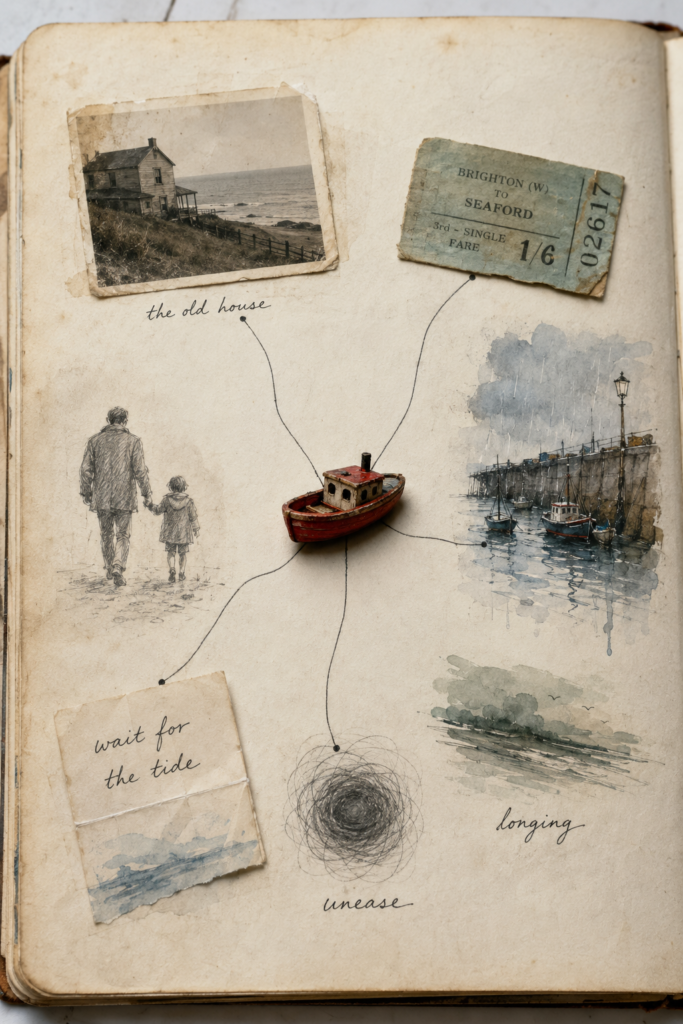
Nightmares, anxiety and punishment dreams
| Challenge | Freud’s response | Scientific difficulty |
|---|---|---|
| Anxiety dreams | The wish has escaped disguise or the dream-work has failed, allowing anxiety to interrupt sleep. | The unpleasant content is reclassified within the theory rather than serving as a clear test against it. |
| Punishment dreams | A punitive agency of the personality fulfils its own wish to punish the dreamer. | Opposing motives can both be interpreted as wish fulfilment, making prediction difficult. |
| Traumatic dreams | Freud later acknowledged repetitive trauma dreams as a serious complication and connected them with repetition compulsion. | Literal or near-literal replay of frightening events does not fit comfortably with disguise and pleasure-seeking satisfaction. |
In Beyond the Pleasure Principle (1920), Freud considered traumatic repetition as evidence that some mental activity could not be explained by the simple pursuit of pleasure. He did not abandon wish fulfilment as the general theory of dreams, but the exception revealed a real tension within it.
What contemporary research supports
Modern dream research does not provide a single agreed explanation of why dreams occur. It does, however, allow parts of Freud’s account to be separated and evaluated more carefully.
| Claim | Current position | What follows |
|---|---|---|
| Dreams draw upon personal memories and current concerns. | Well supported. Dream content commonly shows continuity with waking relationships, activities and emotional concerns. | This supports personal context in interpretation, but not the claim that every dream disguises a wish. |
| Recent experiences contribute to dreams. | Well supported. Waking events can be incorporated directly or in fragmented and transformed forms. | Freud’s day residue observation remains recognisable, although modern accounts do not require infantile wishes. |
| Dreams can express motives and desires. | Plausible and sometimes obvious. Some dreams contain desired goals, imagined rewards or relief from frustration. | Some wishful dreams do not establish wish fulfilment as the universal function of dreaming. |
| All dreams disguise repressed wishes through censorship. | Not supported as a general scientific law. There is no accepted independent measure of latent wishes or dream censorship. | The theory can guide interpretation, but should not be presented as a demonstrated mechanism. |
| A special dream-work makes dreaming fundamentally unlike waking thought. | Questioned. Dreaming shares many features with memory, imagination, mind-wandering and waking cognition. | Condensation and transformation may describe dream form without proving a unique Freudian process. |
| Dreams preserve sleep. | Not established as their universal function. Dreams sometimes accompany continued sleep and sometimes awaken the dreamer. | Sleep regulation and dream experience should not be treated as one simple process. |
Freud, REM sleep and the dreaming brain
Freud developed his theory decades before the identification of rapid eye movement sleep in the 1950s. Later biological accounts associated vivid dreaming closely with REM sleep and treated dreams as the mind’s response to internally generated neural activation. This challenged Freud’s motivational account.
The later picture became more complicated. People also report dreams from non-REM sleep, and neurological injury and some drugs can reduce or abolish dreaming without eliminating REM sleep. Mark Solms has argued that motivational forebrain systems are important to dream generation and that this finding restores part of Freud’s emphasis on wanting. Other researchers dispute the extent to which these findings support Freudian wish fulfilment, disguise or censorship.
Evidence that motivation contributes to dreaming is not the same as evidence that every dream fulfils a disguised, repressed wish.
Freud’s lasting contributions and limitations
What remains valuable
- Dreams can be approached as psychologically meaningful rather than dismissed as nonsense.
- Personal associations are more informative than rigid symbol dictionaries.
- Dreams draw upon recent events, old memories, motives and emotional concerns.
- Dream imagery can condense relationships and turn abstract predicaments into concrete scenes.
- The act of narrating and exploring a dream may reveal patterns in waking thought.
What requires caution
- An interpretation is not evidence that a hidden wish has been discovered.
- Sexual or infantile explanations should not be imposed upon ambiguous material.
- Unpleasant dreams cannot automatically be reclassified as disguised satisfaction.
- Agreement from a dreamer may reflect insight, politeness, suggestion or retrospective fit.
- Dream interpretation should not be used to manufacture recovered memories or allegations about other people.
Dreams as metaphorical constructions
From hidden message to lived metaphor
Freud imagined interpretation as a movement from the dream’s manifest surface towards latent thoughts. Another approach is to remain longer with the form of the dream itself. What positions does it create? What is near or distant, open or enclosed, carried or lost, permitted or forbidden? What action seems possible, and what repeatedly prevents it?
The dream need not be treated as a coded statement with one concealed answer. It may be understood as an enacted metaphorical world in which concerns, memories and expectations acquire space, movement, objects and relationships. Freud’s account helped make such exploration possible, even where later approaches reject his universal claim about wish fulfilment.
A dream interpretation is best treated as a proposal that opens further observation, not a verdict that closes meaning.
Questions for exploring a dream
- What had happened during the day or two before the dream?
- Which element carries the strongest feeling, even if it seems unimportant in the story?
- What personal associations arise around each person, object, place or phrase?
- Does anything in the dream provide an imagined satisfaction, escape, vindication or reversal?
- What would make that satisfaction difficult to acknowledge while awake?
- Which parts of the dream do not fit a wish-fulfilment reading?
- How does the dream organise space, movement, permission, danger and relationship?
- What changes when several possible interpretations are allowed to remain open?
These questions do not diagnose the dreamer and do not assume that Freud’s theory is correct. They use it as one perspective among several.
Further reading and research
These resources provide Freud’s original text, accessible explanations of his model and modern discussions of its scientific status.
- Sigmund Freud, The Interpretation of Dreams, complete public-domain English text.
- Sigmund Freud, On Dreams, a shorter presentation of the theory.
- Freud Museum London: guide to The Interpretation of Dreams.
- Freud Museum London: wish fulfilment.
- Freud Museum London: the dream-work.
- Boag, 2017: Freud, motivation and modern dream research.
- Zhang and Guo, 2018: a neuropsychological reconsideration of Freud’s dream theory.
- Roesler, 2023: empirical research and contemporary psychoanalytic dream theory.
- G. William Domhoff: beyond Freud and Jung.
- Domhoff: why empirical dream researchers rejected Freud’s classical theory.
- Scarpelli and colleagues, 2019: dreaming and emotional processes.
A final perspective
Freud did not discover a scientifically proven key that unlocks every dream. He changed the question. A dream could be examined as a personal construction, formed from memory, emotion, conflict and desire. Wish fulfilment remains one possible lens within that exploration, but it should not be mistaken for the single meaning or universal mechanism of dreaming.
This page is for education and critical discussion. Dream interpretation is exploratory rather than diagnostic. Disturbing, recurrent or trauma-related dreams may warrant support from an appropriately qualified health professional.