Psyche and Plasticity
Aldous Huxley
Perception, human potential and the futures we might create
Aldous Huxley was an English novelist, essayist and social critic whose work examined technology, political control, education, spirituality, altered states and the possibilities of human transformation. His books range from the dystopian warnings of Brave New World to the visionary reflections of The Doors of Perception and the constructive social experiment imagined in Island.
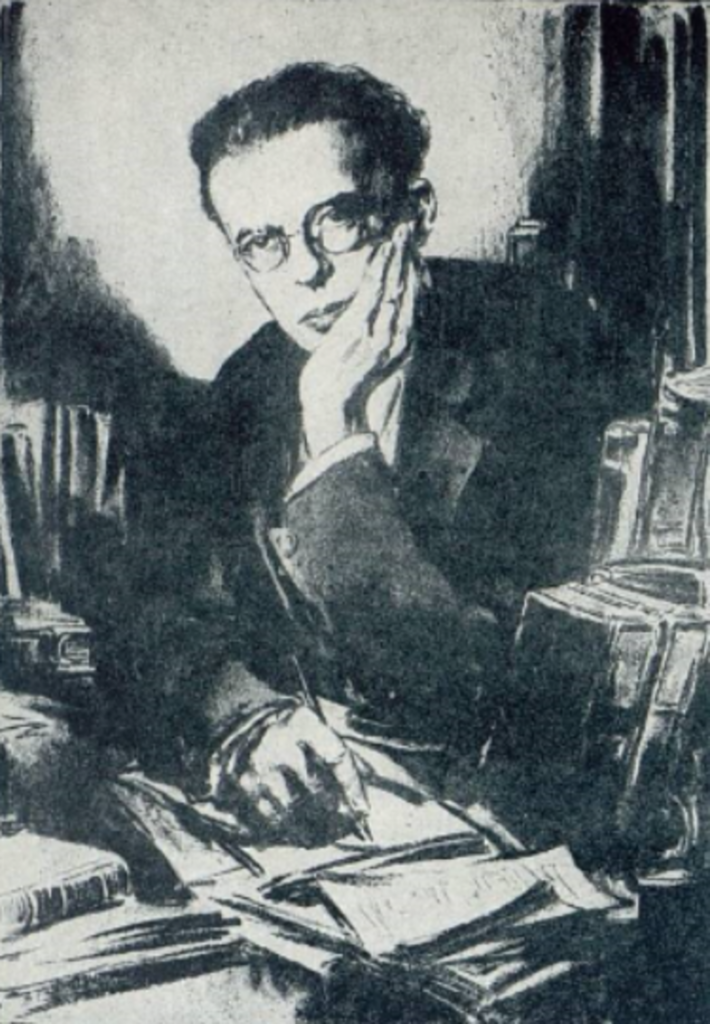
Born
26 July 1894
Birthplace
Godalming, Surrey
Known for
Brave New World
Died
22 November 1963
An introduction
A mapmaker of possible worlds
Huxley’s writing repeatedly asks how human beings are shaped by their environments. Those environments include families, schools, political systems, technologies, languages, drugs, religious traditions and the habits of perception itself.
He was neither simply a pessimist nor an uncomplicated advocate of expanded consciousness. He examined both liberation and control. The same knowledge that might free a person could also be used to condition behaviour, narrow attention or make domination feel pleasurable.
His career can be read as a movement between two questions. What forces diminish human freedom? What practices might help people become more aware, compassionate and capable of responsible choice?
Family, education and loss of sight
Aldous Leonard Huxley was born into a family closely associated with British science, education and literature. His grandfather, Thomas Henry Huxley, was a biologist and prominent defender of Charles Darwin’s theory of evolution. His brother Julian Huxley became a biologist, writer and the first Director-General of UNESCO.
Huxley studied at Eton College. In his teenage years, keratitis severely impaired his eyesight. The condition interrupted plans for a career in medicine and left him with restricted vision for much of his life.
He later studied English literature at Balliol College, Oxford. His limited eyesight influenced his relationship with reading, art and visual perception. Questions about what the eye sees, what the brain selects and what consciousness excludes would become central to his later work.
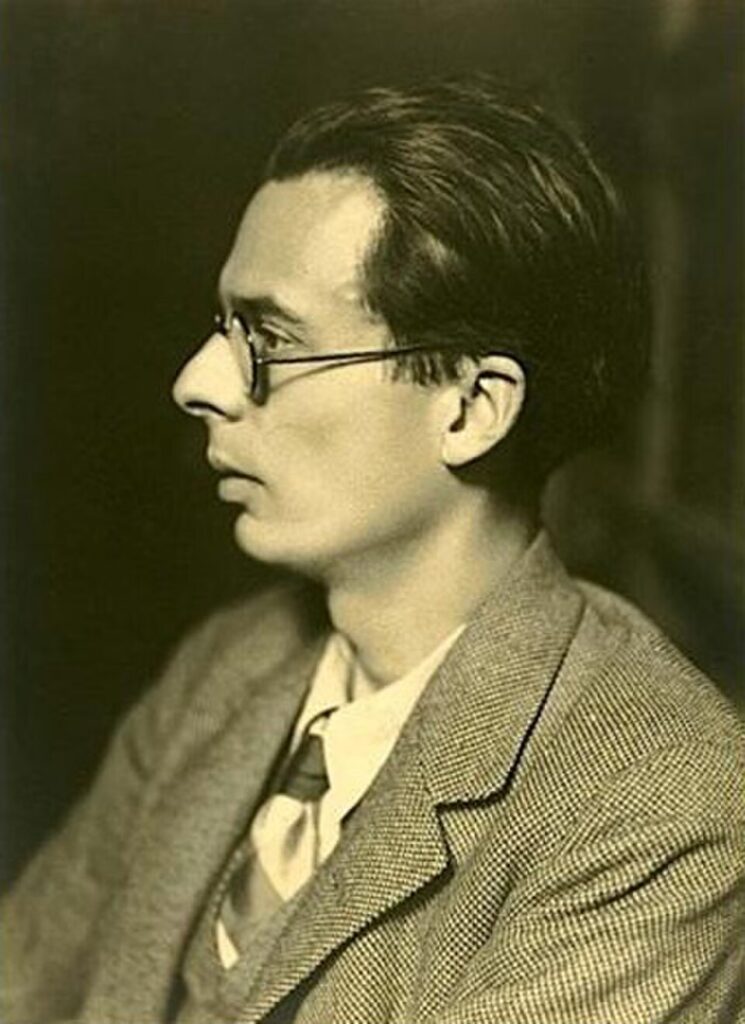
The satirical novelist
Huxley first became known for novels that satirised the manners, ambitions and intellectual fashions of the English upper classes. His early fiction displays a sharp awareness of hypocrisy, social performance and the gap between intelligence and wisdom.
Crome Yellow, published in 1921, established his reputation. It was followed by works including Antic Hay, Those Barren Leaves and Point Counter Point.
The early novels are populated by articulate people who can explain almost everything while struggling to live well. Huxley’s satire is directed not against intelligence itself, but against intelligence detached from emotional maturity, ethical responsibility and direct experience.

A comfortable dystopia
Brave New World
Published in 1932, Brave New World imagines a society maintained through reproductive technology, genetic selection, psychological conditioning, consumerism, social classification and the drug soma.
Its citizens are not primarily controlled through visible violence. They are conditioned to desire the lives assigned to them. Entertainment, consumption and chemical relief prevent discomfort from developing into critical reflection.
The novel asks whether freedom can survive when domination becomes pleasant. It also questions whether happiness retains its meaning when grief, conflict, privacy, family bonds and individual choice have been systematically removed.
Its themes remain relevant to debates about behavioural data, consumer psychology, pharmaceutical relief, reproductive technology, algorithmic persuasion and the engineering of attention.
Methods of social control
Huxley understood that power can work by shaping desire as well as by imposing fear.
Conditioning
Beliefs and preferences are installed early, before the individual has the capacity to examine them.
Consumption
Identity becomes tied to acquiring, replacing and consuming goods.
Distraction
Continuous entertainment leaves little room for solitude or sustained reflection.
Chemical escape
Unwanted feelings are suppressed without addressing the conditions that produced them.
Brave New World Revisited
In 1958, Huxley returned to the themes of his novel in Brave New World Revisited. This nonfiction work considered how developments in propaganda, advertising, pharmacology, overpopulation and mass communication compared with his earlier predictions.
He was concerned that democratic societies might retain the appearance of freedom while increasingly influencing citizens through psychological methods they scarcely noticed.
Huxley argued that freedom required more than laws. It required education in critical thinking, awareness of persuasive methods, protection from concentrated power and the psychological capacity to tolerate uncertainty.
From satire to spiritual philosophy
California, Vedanta and contemplation
Huxley moved to the United States in 1937 and eventually settled in Southern California. He worked as a screenwriter for a time while continuing to publish novels and essays.
In California, he developed friendships with figures including writer Christopher Isherwood, philosopher Gerald Heard and Swami Prabhavananda of the Vedanta Society of Southern California.
Vedanta offered Huxley a disciplined philosophical framework for examining consciousness, selfhood and contemplation. He participated in lectures and contributed essays to Vedanta and the West.
His growing spiritual interest did not entirely replace his scepticism. He continued to compare traditions, assess practices and search for principles that could be tested through experience rather than accepted solely through authority.

The Perennial Philosophy
Published in 1945, The Perennial Philosophy gathers passages from mystical and contemplative traditions and organises them around themes such as self-knowledge, charity, detachment, suffering and the nature of ultimate reality.
Huxley proposed that major religious traditions contain a shared core of insight. This core concerns a reality greater than the individual ego, the possibility of directly apprehending it, and the ethical transformation expected to follow such apprehension.
The book is influential but should not be mistaken for a neutral survey of world religion. Huxley selected material that supported his synthesis. Differences between traditions, historical contexts and competing theological claims receive less attention.
For Huxley, genuine spiritual insight was expected to alter conduct. Awareness without compassion or responsibility remained incomplete.
The Doors of Perception
In 1953, Huxley invited psychiatrist Humphry Osmond to supervise an experiment with mescaline at his home in California. Osmond had been researching mescaline, LSD and altered perception in Saskatchewan.
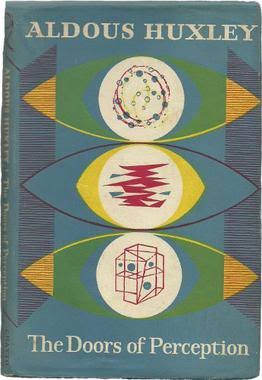
Huxley described the experience in The Doors of Perception, published in 1954. Rather than concentrating on elaborate hallucinations, he wrote about an intensified encounter with ordinary things: flowers, furniture, clothing, colour and space.
The title comes from William Blake’s The Marriage of Heaven and Hell. Huxley used Blake’s image of cleansing perception to frame the possibility that ordinary consciousness filters out more than it reveals.
The book became one of the most influential literary accounts of a psychedelic experience and helped bring the subject into discussions of art, religion, consciousness and philosophy.
The reducing-valve hypothesis
Huxley proposed that the brain and nervous system function partly as a reducing valve. Rather than producing the whole field of consciousness, they might restrict awareness to information that supports biological survival and practical action.
Under this model, ordinary consciousness is not a complete representation of reality. It is a narrow and useful selection. Psychedelics, meditation, hypnosis, sensory alteration and other unusual conditions might temporarily change the filtering process.
Attention
Only a small portion of available information enters conscious awareness.
Selection
Perception prioritises what appears relevant to safety, action, identity and learned goals.
Alteration
Changes in brain state can modify which information is emphasised and how it is interpreted.
Scientific context
The reducing valve is a philosophical model, not an established neuroscientific mechanism. Modern research does show that perception is selective and actively constructed, but this does not demonstrate that the brain normally blocks access to a universal field of consciousness.
Heaven and Hell
In Heaven and Hell, published in 1956, Huxley extended his reflections on visionary experience. He examined luminous colour, geometric form, jewels, stained glass, religious art, landscape and the imagery associated with dreams and altered states.
He recognised that unusual states were not necessarily pleasant or wise. Experiences could be ecstatic, beautiful, frightening, confusing or psychologically destabilising. The title itself acknowledges that altered consciousness may disclose both heavenly and hellish worlds.
Huxley also distinguished temporary visionary experience from lasting personal transformation. A striking experience might reveal new possibilities, but ethical development still required practice, reflection and changes in ordinary life.
Huxley’s approach to psychedelic experience
Huxley regarded psychedelics as potentially valuable tools, but he did not present them as automatic routes to wisdom. His writing contains enthusiasm, speculation and caution.
- Not every person will have the same response.
- Expectation and environment influence the experience.
- A visionary state does not guarantee accurate knowledge.
- Psychological risks cannot be removed by philosophical enthusiasm.
- Insight requires integration into conduct and everyday relationships.
- Altered states should not replace sustained contemplative or ethical practice.
His views emerged before modern clinical standards for psychedelic research. Contemporary workplaces place greater emphasis on screening, informed consent, preparation, monitoring, therapeutic boundaries, and follow-up support.
An alternative future
Island
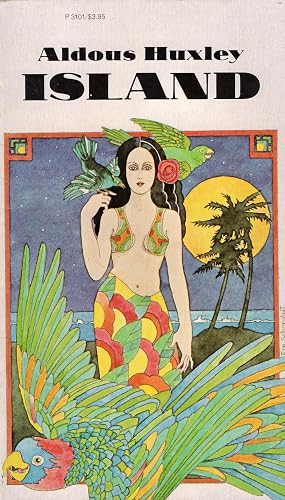
Published in 1962, Island presents Pala, a fictional society that combines selected elements of Eastern philosophy, Western science, cooperative education, preventive medicine, ecological awareness and conscious preparation for death.
Where Brave New World imagines psychology used for conditioning, Island imagines it used to increase awareness and responsibility. While soma maintains conformity, Pala’s fictional moksha medicine is embedded in education, ritual, and community.
Pala is not presented as invulnerable. It faces commercial, political and military pressures. Huxley recognised that humane cultures exist within larger systems that may reward extraction, competition and authoritarian control.
Brave New World and Island
Brave New World
- Conditioning for conformity
- Centralised control
- Consumption as obligation
- Medication as social pacification
- Stability without freedom
- Technology serving power
Island
- Education for awareness
- Distributed responsibility
- Ecological restraint
- Medicine within relationship
- Freedom with responsibility
- Technology serving human needs
Together, the novels show that Huxley’s central concern was not technology by itself. His concern was the purpose it served, the values surrounding it and the kind of human being it helped to create.
Recurring themes
Perception
Human beings experience selected and interpreted versions of the world rather than an unfiltered totality.
Conditioning
Culture and institutions shape what people notice, value, fear and regard as possible.
Self-transcendence
People seek temporary freedom from the isolated self through art, ritual, love, religion, intoxicants and collective experience.
Education
Education can create passive conformity or develop attention, discernment, cooperation and independence.
Ecology
Human wellbeing cannot be separated from population, resources, agriculture and the health of natural systems.
Ends and means
A desirable goal cannot be separated from the methods used to achieve it. Harmful means reshape the destination.
Selected works
Fiction
- Crome Yellow, 1921
- Point Counter Point, 1928
- Brave New World, 1932
- Eyeless in Gaza, 1936
- After Many a Summer, 1939
- Island, 1962
Consciousness and religion
- The Perennial Philosophy, 1945
- The Doors of Perception, 1954
- Heaven and Hell, 1956
- The Devils of Loudun, 1952
Society and human development
- Ends and Means, 1937
- The Art of Seeing, 1942
- Brave New World Revisited, 1958
- Literature and Science, 1963
A brief chronology
1894
Born in Godalming, Surrey, into the Huxley family.
1911
Keratitis severely damages his eyesight and changes the direction of his education.
1921
Crome Yellow, his first novel, is published.
1932
Brave New World is published.
1937
Moves to the United States and settles in California.
1945
The Perennial Philosophy is published.
1953
Takes mescaline under Humphry Osmond’s supervision.
1954
The Doors of Perception is published.
1962
Island, his final novel, is published.
1963
Dies in Los Angeles on 22 November, the same day that President John F. Kennedy is assassinated.
Influence and cultural legacy
Political thought
His dystopian writing remains central to discussions of propaganda, conditioning, surveillance and pleasurable forms of control.
Psychedelic culture
The Doors of Perception shaped later discussions of psychedelics, visionary art, spirituality and consciousness.
Human potential
His later work influenced alternative education, ecological thinking, contemplative psychology and the human potential movement.
The rock band The Doors took its name from Huxley’s book, which had itself borrowed its title from William Blake. His concepts continue to move between literature, music, psychology, politics and debates about consciousness.
A balanced assessment
Huxley was an essayist and imaginative synthesiser rather than a neuroscientist or clinical researcher. His writing is valuable partly because it connects fields, but those connections sometimes move beyond what evidence can establish.
- His dystopian analysis remains relevant, but it should not be treated as literal prediction.
- His reducing-valve model is philosophically suggestive but scientifically unconfirmed.
- His account of mescaline describes one person’s experience rather than a universal response.
- His Perennial Philosophy highlights similarities between traditions while underrepresenting their differences.
- Island offers constructive ideas while also reflecting assumptions and limitations of its historical period.
His enduring contribution lies in placing perception, freedom, technology, spirituality and social organisation within the same conversation. He understood that changing the human future requires attention both to external institutions and to the inner habits through which people experience the world.
Sources and further reading
- National Endowment for the Humanities: The Talented Mr Huxley
- A Brief History of Psychedelic Psychiatry
- Aldous Huxley, Brave New World
- Aldous Huxley, Brave New World Revisited
- Aldous Huxley, The Perennial Philosophy
- Aldous Huxley, The Doors of Perception
- Aldous Huxley, Heaven and Hell
- Aldous Huxley, Island
This page provides historical and educational information. Psychedelic substances can produce serious psychological and physical risks, may interact with health conditions or medication, and remain legally controlled in many jurisdictions. Historical accounts should not be interpreted as advice to obtain or use controlled substances.