Psyche and Plasticity
Terence McKenna
Language, psychedelics, imagination and the living intelligence of nature
Terence McKenna was an American writer, lecturer and independent ethnobotanical thinker whose talks brought together psychedelic experience, ecology, shamanism, language, technology, alchemy and cultural criticism. His verbal inventiveness made him one of the most recognisable voices of late twentieth-century psychedelic culture.
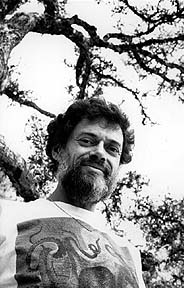
Born
16 November 1946
Birthplace
Paonia, Colorado
Known for
Psychedelic philosophy
Died
3 April 2000
An introduction
An explorer of ideas
McKenna did not build his reputation through a conventional academic career. His influence came through books, workshops, recorded lectures and long improvised talks that moved rapidly between botany, anthropology, literature, philosophy, cybernetics and personal psychedelic experience.
He was an unusually gifted speaker. His ideas were often presented as invitations to imaginative experimentation rather than as complete systems. He combined careful observations about language and culture with proposals that ranged from plausible speculation to claims unsupported by scientific evidence.
Reading McKenna well therefore requires two capacities at once: openness to metaphor and novelty, and a willingness to distinguish rhetorical brilliance from demonstrated fact.
Childhood, nature and imagination
Terence Kemp McKenna was born in Paonia, a small town in Colorado. The surrounding landscape encouraged an early interest in nature, fossils and the work of explorers and naturalists.
As a teenager, he encountered the psychology of Carl Jung and became interested in alchemy, symbolism and the unconscious. Accounts of visionary mushrooms and the work of Aldous Huxley introduced him to psychedelics as possible instruments for exploring consciousness.
McKenna later attended the University of California, Berkeley. His studies combined ecology, resource conservation and subjects related to shamanism. He graduated in 1975.

Travel, plants and traditional knowledge
During the late 1960s and early 1970s, McKenna travelled through Asia and South America. His interests included Tibetan religion, ruins, traditional medicines, butterflies and the cultural use of psychoactive plants.
He spent time in Nepal and travelled through Southeast Asia, where he collected butterflies. He later journeyed to the Colombian Amazon with his brother Dennis McKenna and a small group of companions.
These journeys gave McKenna much of the material from which his later identity developed. He positioned the psychedelic plant not merely as a chemical object, but as part of an ecological and cultural relationship involving knowledge, ritual, expectation and place.
A necessary distinction
McKenna is frequently described as an ethnobotanist, but he did not follow a conventional academic research career in ethnobotany. “Independent ethnobotanical writer and thinker” more accurately describes his combination of field interest, plant knowledge and cultural interpretation.
Amazonian experiment and personal mythology
La Chorrera
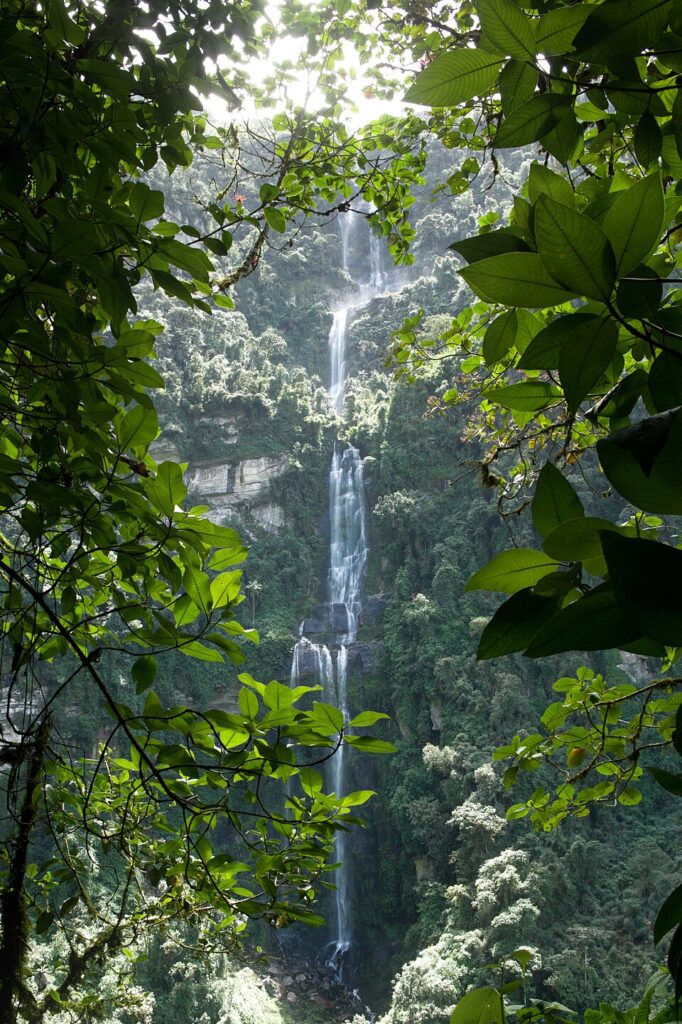
In 1971, Terence and Dennis McKenna travelled with friends to La Chorrera in the Colombian Amazon. They were initially searching for plant preparations containing DMT but encountered abundant psilocybin mushrooms.
The group undertook an intense series of psychedelic experiments. Dennis and Terence developed speculative ideas involving sound, DNA, the mushroom, the nervous system and the structure of time.
Their account appeared in The Invisible Landscape. Terence later retold the journey in True Hallucinations, combining memoir, philosophy, humour and extraordinary claims.
La Chorrera became the central origin story of McKenna’s public philosophy. It should be read as a record of subjective experience and speculative interpretation rather than as a controlled scientific investigation.
The psychedelic as an encounter
McKenna frequently described psychedelic experience as an encounter with something apparently autonomous. This was especially true of his accounts of DMT and high-dose psilocybin experiences.
Psychological model
The entities may represent personified mental processes, expectations, memory and imagination under altered brain conditions.
Cultural model
The content may be shaped by folklore, science fiction, religion, shamanic narratives and previous psychedelic accounts.
Ontological model
McKenna entertained the possibility that the entities had an existence independent of the person experiencing them.
Research confirms that some DMT users report entity-like experiences. It does not establish that independently existing beings have been contacted. The experience and its interpretation must be considered separately.
Language made visible
One of McKenna’s most distinctive themes was the relationship between psychedelics and language. He described visionary experience as if meaning could become visible, spatial and almost tangible.
Ordinary language separates sound from the thing represented. McKenna imagined a form of communication in which meaning would be directly perceived rather than translated through conventional symbols.
This idea connects his interest in glossolalia, song, visual art, virtual reality and the rapid development of digital media. He anticipated that technology might allow increasingly complex ideas to be communicated through shared visual environments.
His descriptions are best understood as philosophical and poetic proposals rather than established theories of linguistics or neuroscience.

The archaic revival
McKenna used “archaic revival” to describe the return of practices and values suppressed by industrial and hierarchical culture. He included shamanism, ecological awareness, direct experience, communal ritual, altered states, sexuality and renewed attention to the body.
He did not advocate a literal return to prehistoric life. His proposal was that technologically sophisticated societies should recover forms of knowledge that emphasise participation in nature rather than domination over it.
The idea contains a genuine ecological criticism, but it can also romanticise Indigenous and pre-industrial cultures. Such cultures are diverse, historically changing and not simply repositories of an undamaged human past.
The useful question is not whether modernity should be abandoned, but which neglected forms of relationship might correct its destructive tendencies.
Food of the Gods
Published in 1992, Food of the Gods presents McKenna’s broad history of human relationships with psychoactive plants and substances. It discusses mushrooms, fermented drinks, cannabis, opium, sugar, coffee, tobacco, cocaine and synthetic drugs.
McKenna argues that a culture’s preferred drugs reflect and reinforce its social values. Stimulants may support work and production, sedatives may reduce distress without changing its causes, and psychedelics may challenge established assumptions.
The book is ambitious and imaginative, but its historical narrative is selective. Several major claims, including his proposed role for psilocybin in human evolution, lack direct supporting evidence.
The “stoned ape” hypothesis
McKenna proposed that early hominins may have encountered psilocybin mushrooms while following grazing animals across the African grasslands. He speculated that different doses might have influenced visual acuity, sexual behaviour, group bonding, imagination and language.
According to the proposal, repeated use of mushrooms might have contributed to the rapid development of human cognition and culture. The phrase “stoned ape theory” became popular later, although “hypothesis” is the more appropriate description.
Scientific assessment
There is no archaeological, genetic or palaeoanthropological evidence demonstrating that psilocybin drove the evolution of human language or brain expansion. The hypothesis is difficult to test and is not accepted as an established account of human evolution. I bet Joe Rogan knows different though.
Its cultural appeal lies partly in its reversal of human exceptionalism. Instead of intelligence emerging through human effort alone, McKenna imagines cognition developing through ecological interaction with another species.

Plants, knowledge and conservation
Botanical Dimensions
Terence McKenna and ethnobotanist Kathleen Harrison founded Botanical Dimensions in Hawaii in 1985. Its purpose was to collect, cultivate and preserve plants of ethnomedical and cultural importance.
The project reflected the practical side of McKenna’s philosophy. Cultural knowledge is vulnerable when habitats disappear, languages decline, or communities lose access to traditional plants.
Botanical conservation can therefore involve more than preserving biological specimens. It may also involve relationships, names, methods of cultivation, ceremonial contexts and the rights of knowledge-holding communities.
Novelty theory and Timewave Zero
McKenna’s novelty theory proposed that time possesses a changing quality. He contrasted habit, associated with repetition and stability, with novelty, associated with change, complexity and new organisation.
Drawing upon the King Wen sequence of the I Ching, he and collaborators developed a numerical graph called Timewave Zero. McKenna believed it described cycles of novelty in history and approached a final point of maximum novelty.
The theory later became associated with 21 December 2012, a date connected in popular culture with the completion of a cycle in the Maya Long Count calendar.
Scientific assessment
Novelty theory has no accepted basis in physics, mathematics or historical science. The numerical values used to construct the timewave depend upon subjective choices, and the proposed historical correspondences are vulnerable to selective interpretation. The predicted 2012 culmination did not occur.
Timewave Zero remains culturally interesting as speculative mythology and an attempt to imagine history as an accelerating pattern. It should not be presented as a valid predictive model.
Technology, culture and the imagination
Electronic culture
McKenna recognised that digital networks would accelerate the exchange and recombination of ideas.
Virtual reality
He imagined virtual spaces as environments in which language, imagination and sensory experience could converge.
Cultural mutation
New media enable ideas to spread outside institutions, although they can also amplify confusion and unsupported claims.
McKenna’s own posthumous influence demonstrates this process. Thousands of hours of recorded speech circulate online, sampled into music, animation, podcasts and short videos. His voice became part of the digital culture he anticipated.
McKenna’s approach to psychedelics
McKenna advocated direct experience and frequently discussed naturally occurring psychedelics, particularly psilocybin mushrooms, DMT-containing plants and ayahuasca. His rhetoric could be playful, forceful and intentionally provocative.
His personal recommendations should not be confused with contemporary clinical guidance. High-dose psychedelic experiences can involve panic, confusion, dangerous behaviour, trauma activation, mania, psychosis or lasting perceptual disturbance.
- Responses vary considerably between individuals.
- Potency can be uncertain outside controlled research settings.
- Some substances interact dangerously with medication or medical conditions.
- Personal or family histories of psychosis or bipolar disorder may increase risk.
- An intense experience is not necessarily accurate, therapeutic or spiritually authoritative.
- Legal status varies between jurisdictions.
Selected works
Psychedelic experience
- True Hallucinations
- The Invisible Landscape, with Dennis McKenna
- Psilocybin: Magic Mushroom Grower’s Guide, with Dennis McKenna under pseudonyms
Culture and history
- Food of the Gods
- The Archaic Revival
- Shamanic Technologies of the Phuture
Dialogues
- Trialogues at the Edge of the West
- The Evolutionary Mind
- Chaos, Creativity and Cosmic Consciousness
A brief chronology
1946
Born in Paonia, Colorado.
1965
Begins studying at the University of California, Berkeley.
Late 1960s
Travels through Asia and works as a butterfly collector.
1971
Travels to La Chorrera in the Colombian Amazon.
1975
The Invisible Landscape is published, and McKenna completes his degree at Berkeley.
1985
Founds Botanical Dimensions with Kathleen Harrison.
1992
Food of the Gods is published.
1993
True Hallucinations is published.
2000
Dies aged 53 after being diagnosed with an aggressive brain tumour.
Influence and cultural legacy
Psychedelic culture
His lectures gave psychedelic culture a vocabulary that was ecological, literary, humorous and resistant to institutional authority.
Electronic music
Recordings of his voice have been sampled by musicians, DJs and multimedia artists across several generations.
Internet culture
Digitised talks allowed his work to reach an audience much larger than the workshops and lecture halls of his lifetime.
A balanced assessment
McKenna’s importance lies less in establishing a scientific system than in expanding the cultural imagination around plants, language, ecology and altered states.
- His ecological criticism and defence of direct experience remain influential.
- His recorded lectures demonstrate exceptional verbal and imaginative ability.
- His accounts of psychedelic states are valuable as first-person reports, not objective maps of reality.
- The stoned ape hypothesis lacks supporting evolutionary evidence.
- Timewave Zero is not a valid scientific or predictive model.
- Claims about autonomous entities remain open to psychological and neurological explanations.
- His representation of Indigenous knowledge should be considered alongside Indigenous voices and contemporary scholarship.
McKenna is best approached as a speculative philosopher, storyteller and catalyst for questions. His strongest invitation was to resist passive cultural inheritance, observe nature carefully and participate in the creation of new ideas.
Sources and further reading
- Official Terence McKenna archive
- Penguin: True Hallucinations and author biography
- Penguin: Food of the Gods
- Terence McKenna, Food of the Gods
- Terence McKenna, The Archaic Revival
- Terence McKenna, True Hallucinations
- Terence and Dennis McKenna, The Invisible Landscape
- Terence McKenna, Ralph Abraham and Rupert Sheldrake, Trialogues at the Edge of the West
This page provides historical and educational information. Psychedelic substances can cause serious psychological and physical harm, may interact with health conditions or medication, and remain legally controlled in many jurisdictions. McKenna’s personal accounts and recommendations should not be interpreted as medical advice or encouragement to use controlled substances.