Introduction
Milton H. Erickson (1901–1980) was an American psychiatrist renowned for his innovative and often unconventional approaches to psychotherapy and clinical hypnosis. Credited with transforming the field of hypnotherapy, Erickson’s techniques emphasized individualised treatment, the subtle use of suggestion, and the utilization of the client’s personal strengths and resources. Among the many anecdotes and case studies recounting his work, one well-known story is often referred to informally as the “Tomato” client. This particular tale reveals much about Erickson’s therapeutic style: the pivotal role of experiential tasks, strategic suggestions, and the fostering of autonomy and creativity in clients.
Although the exact details differ slightly depending on the source, the “Tomato” story remains emblematic of Erickson’s ability to tailor interventions that lead clients to discover their own capacity for change.
It ought to be noted that simply telling a client to grow tomatoes is unlikely to yield much in terms of therapeutic benefit. This is likely to be the only client that Erickson ever suggested to do this, because it was specific to the individual client.
Note: The client was a florist with a terminal cancer on his face.
“He was a florist who grew the flowers he sold and was an enthusiastic businessman, respected by family and friends. He developed a growth on the side of his face, and when the surgeon removed it there was found to be a malignancy. Joe was informed he had about a month to live, became unhappy and distressed, and developed extremely severe pain. Narcotics were giving him little relief, and a relative asked Erickson to try hypnosis. Erickson agreed reluctantly to see him, doubting whether he could do much in this situation. There were toxic reactions from excessive medication, and Joe disliked even the mention of the word hypnosis. In addition, one of his children was a resident in psychiatry who had been taught that hypnosis was of no value.” https://www.ericksoninstitute.it/en/38/palliative-care/one-day-at-the-time/
…Maybe-and this is talking like a child-maybe the tomato plant does feel comfortable and peaceful as it grows. Each day it grows and grows and grows, it’s so comfortable, Joe, to watch a plant grow and not see its growth, not feel it, but just know that all is getting better for that little tomato plant that is adding yet another leaf and still another and a branch, and it is growing comfortably in all directions…
Background on Milton H. Erickson’s Therapeutic Approach
Milton H. Erickson’s therapeutic approach is marked by several defining features:
- Utilisation Principle: Erickson believed that every behavior or symptom—even those deemed problematic—could be used as a resource for therapeutic change. Rather than confronting resistance head-on, Erickson sought to utilise it constructively, transforming obstacles into pathways toward growth.
- Tailored Interventions: Instead of rigid protocols and scripts, Erickson customised interventions to suit each client’s unique personality, context, and goals. He valued creativity and flexibility, often devising tasks or “homework” specific to a client’s life circumstances.
- Indirect Suggestion: Erickson frequently used metaphor, anecdotes, and indirect suggestions in clinical hypnosis. These techniques helped clients open themselves to new perspectives or behaviors by bypassing conscious resistance.
- Empowerment and Autonomy: Unlike authoritarian models of hypnosis, Erickson’s approach respected the client’s autonomy. He viewed therapy as a collaborative endeavor, guiding clients to discover their inherent abilities and insights.
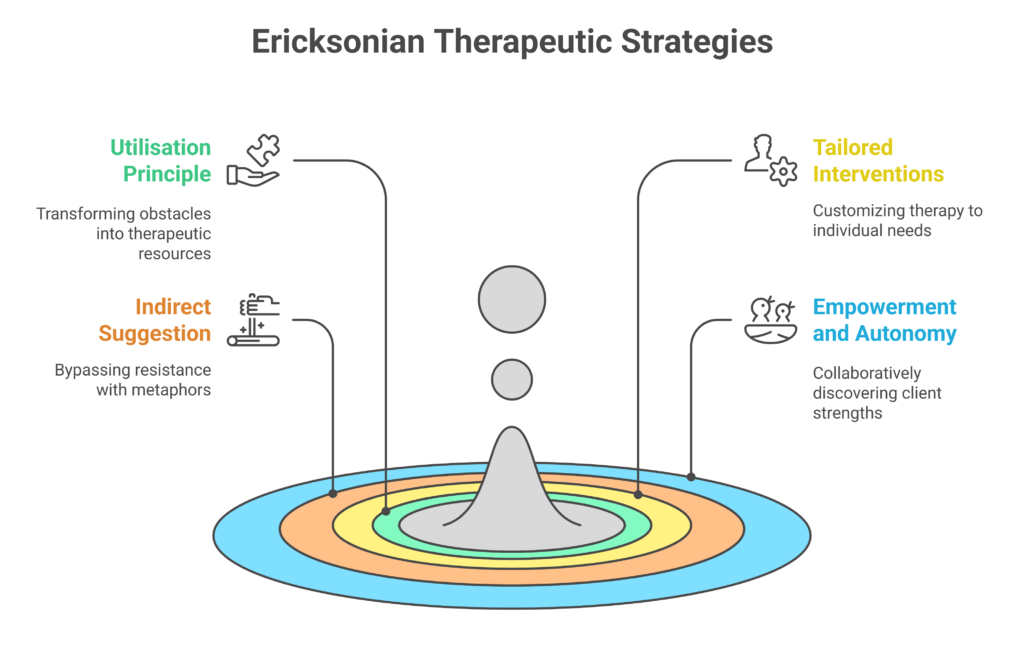
Within this context, the “Tomato” client case exemplifies the ingenuity and subtlety of Erickson’s strategies. Though it is often recounted differently by Erickson’s students and admirers, the common elements underscore his therapeutic focus on experiential change and meaningful tasks.
The “Tomato” Client: A Synopsis
In many versions of this anecdote, Erickson’s client presents with severe depression or a pervasive sense of hopelessness. Conventional psychotherapeutic approaches have had little success, leaving the client demoralized and unable to envision an improvement in their condition. Rather than focusing on insight-based discussion or attempting to fix the client’s depressed thinking directly, Erickson prescribes a deceptively simple task: grow tomato plants.
The rationale behind this directive is rooted in experiential learning. Caring for living plants that require daily watering, attention to sunlight, and consistent nurturing gives the client a microcosm of change and growth. The tomatoes become a living metaphor. As the client invests effort and witnesses the plants’ progress—seeds sprouting, vines thickening, tomatoes ripening—they experience tangible evidence that small, consistent actions can create significant transformations over time.
Different recountings of the story emphasize various details. Some narratives suggest that the client started sharing tomatoes with neighbors, fostering a social network that countered their isolation. Other versions note how the daily responsibility gave the client purpose, a reason to rise every morning, and ultimately alleviated core depressive symptoms. Regardless of the exact details, the key lesson remains consistent: the patient’s active engagement in a purposeful task reframed their sense of agency, helping them believe in the possibility of growth in their own life as well.
And soon the tomato plant will have a bud form somewhere, on one branch or another, but it makes no difference because all the branches, the whole tomato plant will soon have those nice little buds. I wonder if the tomato plant can, Joe, feel, really feel, a kind of comfort. You know, Joe, a plant is a wonderful thing, and it is so nice, so pleasing just to be able to think about a plant as if it were a man. Would such a plant have nice feelings, a sense of comfort as the tiny little tomatoes begin to form, so tiny, yet so full of promise to give you the desire to eat a luscious tomato, sun-ripened, it’s so nice to have food in one’s stomach, that wonderful feeling a child, a thirsty child has and can want a drink. Joe, is that the way the tomato plant feels when the rain falls and washes everything so that all feels well?
Analysis of Key Therapeutic Principles
- Experiential Tasks and Behavioural Activation
Erickson’s tomato-plant directive aligns with what would now be recognized as “behavioral activation,” a principle in certain evidence-based therapies for depression. Erickson effectively nudged the client into consistent, purposeful behavior by introducing a simple, life-affirming daily activity. This task circumvents excessive rumination on depressive thoughts and anchors the client in immediate, positive action. The sense of accomplishment—whether from witnessing the first sprout or harvesting the first tomato—provides concrete evidence that change is possible. - Utilization and Metaphorical Resonance
Erickson’s approach relied heavily on metaphors to foster insight. The “tomato” can be read as a symbol of growth, nourishment, and patience. By assigning the client the role of caregiver to these plants, Erickson effectively mirrored the process of caring for oneself. The directive externalized the client’s internal emotional struggles; caring for the tomatoes required the same attunement and kindness that the client was learning to extend to themselves. - Indirect Suggestion and Positive Expectancy
Instead of telling the client “You must overcome your depression,” Erickson’s strategy implied improvement through the simple act of gardening. In Ericksonian hypnosis, indirect suggestion can be more powerful than direct orders, precisely because it lowers resistance. The task of growing tomatoes subtly instilled a positive expectancy—each small step toward caring for the plants hinted at similar small steps toward self-care and renewal. - Reframing and Autonomy
By reframing therapy as an experimental project—“Let’s see if you can grow these plants”—Erickson granted the client autonomy and a sense of control. Feelings of powerlessness often characterise depression; assigning the client a project that required initiative and consistent effort restored a measure of personal agency. The intervention functioned as an antidote to learned helplessness, enabling the client to reconnect with their capacity to effect change, both in the garden and their broader life.
Contrasts with Traditional Psychotherapy
More classical forms of psychotherapy might focus primarily on introspection, exploring the origins of the client’s depression or dysfunctional thought patterns. Although insight-based interventions can be valuable, Erickson’s approach was decidedly action-oriented. He emphasized doing rather than merely talking about doing. Erickson was not dismissive of the client’s feelings; rather, he sidestepped the possibility of excessive intellectualization by prescribing a simple, concrete task that fostered change organically.
Moreover, instead of challenging the client’s depressive cognitions through direct confrontation (e.g., disputing negative thoughts), Erickson’s emphasis on indirect suggestion allowed the client to reach new conclusions experientially. This process often felt more natural and less adversarial to the client, thereby lowering defensiveness and enhancing openness.
References
- Erickson, M. H., & Rossi, E. L. (1979). Hypnotherapy: An Exploratory Casebook. Irvington.
- Haley, J. (1973). Uncommon Therapy: The Psychiatric Techniques of Milton H. Erickson, M.D. W. W. Norton & Company.
- Rosen, S. (Ed.). (1982). My Voice Will Go With You: The Teaching Tales of Milton H. Erickson. W. W. Norton & Company.
- Zeig, J. K. (Ed.). (1980). A Teaching Seminar with Milton H. Erickson. Brunner/Mazel.
(Note: Specific details of the “Tomato” client anecdote may vary as they are often recounted in interviews, teaching seminars, and secondary writings on Erickson’s work.)